What is a Collective Learning Engine?

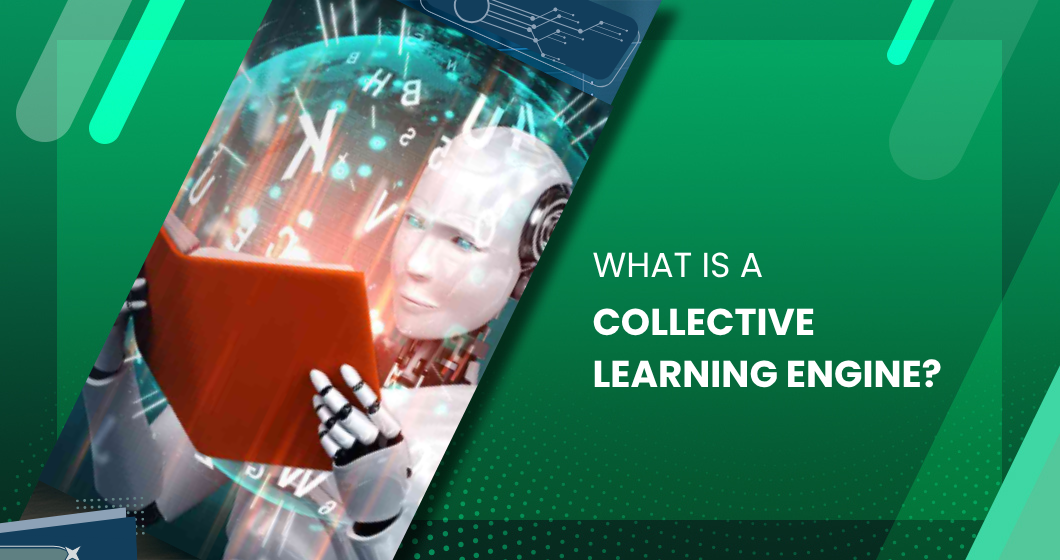
A collective learning engine is an AI capability that improves performance by learning from many interactions rather than a single case. Every question asked, answer provided, action taken, and result achieved becomes a signal the system can use to get better next time. Instead of a static bot that repeats the same behavior, a collective learning engine continually refines intent recognition, answer ranking, tool selection, and escalation rules.
How does a Collective Learning Engine work?

The engine runs a repeatable loop:

  • Capture interaction data. It logs queries, context, the content retrieved, the action executed, and whether the user confirmed success. Personally sensitive fields are masked and only performance signals are retained.
  • Normalize and label. Similar queries are clustered, outcomes are labeled as resolved or unresolved, and features like department, device type, and time of day provide segment context.
  • Learn patterns. Models are retrained on where intent mapping failed, which articles truly resolved issues, what clarifying question reduced reopens, and which tools closed tickets fastest.
  • Update indexes and policies. The engine promotes high performing answers, demotes stale content, and adjusts routing, confidence thresholds, and risk rules. It may also propose new knowledge articles where none exist.
  • Measure and repeat. Changes are tracked against metrics like first contact resolution, deflection, and time to answer so only improvements persist.

The result is compounding accuracy. The more the assistant is used, the more it knows how your organization actually asks and solves problems.

Why is a Collective Learning Engine important?

Knowledge and processes never stand still. New software launches, policies change, and language evolves. A collective learning engine keeps your assistant current without constant manual tuning. It provides resilience when experts are busy or move teams, since their solutions are captured and generalized. It also builds trust. Users see that the system adapts to their phrasing and context, so they are more likely to use self service first. Finally, it converts everyday support interactions into continuous improvement data, highlighting friction that would otherwise remain hidden.

Continuously improve with Rezolve AI

Why does a Collective Learning Engine matter for companies?

  • Higher precision over time. Intent errors drop and first contact resolution climbs as the system learns from outcomes.
  • Scalable self service. Better answers mean more deflection and fewer tier 1 tickets, which lowers cost per request.
  • Faster onboarding. New hires benefit from the accumulated expertise of many past interactions, not just documentation.
  • Operational insight. Trends expose missing knowledge, process bottlenecks, and automation opportunities by team or region.
  • Risk reduction. The engine can flag emerging failure modes early, such as spikes in reopens for a specific change.
  • Less maintenance overhead. Many micro improvements happen automatically, so your knowledge team focuses on high impact gaps.

Collective Learning Engine with Rezolve.ai

Rezolve.ai’s SideKick collects quality signals from every conversation in Teams or Slack. If users keep rephrasing a question or agents often add a missing step, AURA Insights surfaces that pattern and proposes a fix. Reasoning RAG then promotes the best snippet for similar queries, while SideKick’s action policies learn which tool or workflow closes the loop fastest. Privacy controls mask sensitive fields and aggregate results by cohort. Over time, customers see higher deflection, faster answers, and fewer reopens, with dashboards that prove the improvement month over month.

Turn every interaction into smarter answers and faster resolutions. Book a Demo Now.