Device lifecycle management: the four handoffs where devices go missing
Devices rarely go missing during procurement or disposal. They go missing in the handoffs in between. The stages of device lifecycle management, the four handoffs where the asset record and reality drift apart, and what to automate at each.

Key takeaways
- Devices rarely go missing at purchase or disposal; they go missing in the handoffs between stages.
- The four risky handoffs are stockroom to user, user to user, user to repair, and user to leaver.
- Make the record update a side effect of a request people already have to make.
- At retirement, keep the sanitization record and the disposal certificate against the device's asset record.
Ask an IT team how many laptops it owns and you will get a number. Ask how many it could physically put on a table this week and you will get a different one.
The gap between those two numbers is rarely created at the edges of the lifecycle. Purchase orders are tracked carefully, and disposal is usually handled by a certified vendor with a certificate at the end. The devices go missing in the middle, in the moments when a laptop changes hands and the record does not keep up.
What is device lifecycle management?
Device lifecycle management is the practice of tracking and managing each device an organization owns, from planning and purchase through deployment, support, reassignment and secure disposal. Its goal is that, at any point, you know where every device is, who has it, what state it is in, and what should happen to it next.
The stages of the device lifecycle
| Stage | What happens | What the record needs |
|---|---|---|
| Plan and procure | Choose standard models and buy against demand | Order, cost, expected recipient |
| Provision | Enroll, configure and image the device | Serial number, configuration, enrollment status |
| Deploy | Hand the device to its first user | Assigned user, date, location |
| Support | Maintain, patch and repair the device in use | Repair history, warranty, condition |
| Recover and redeploy | Collect it from one user, refurbish it, issue it to another | Return date, condition, next owner |
| Retire and dispose | Wipe the data and recycle, resell or destroy the device | Sanitization record, disposal certificate |
Each stage on its own is usually well run. The trouble is between them.
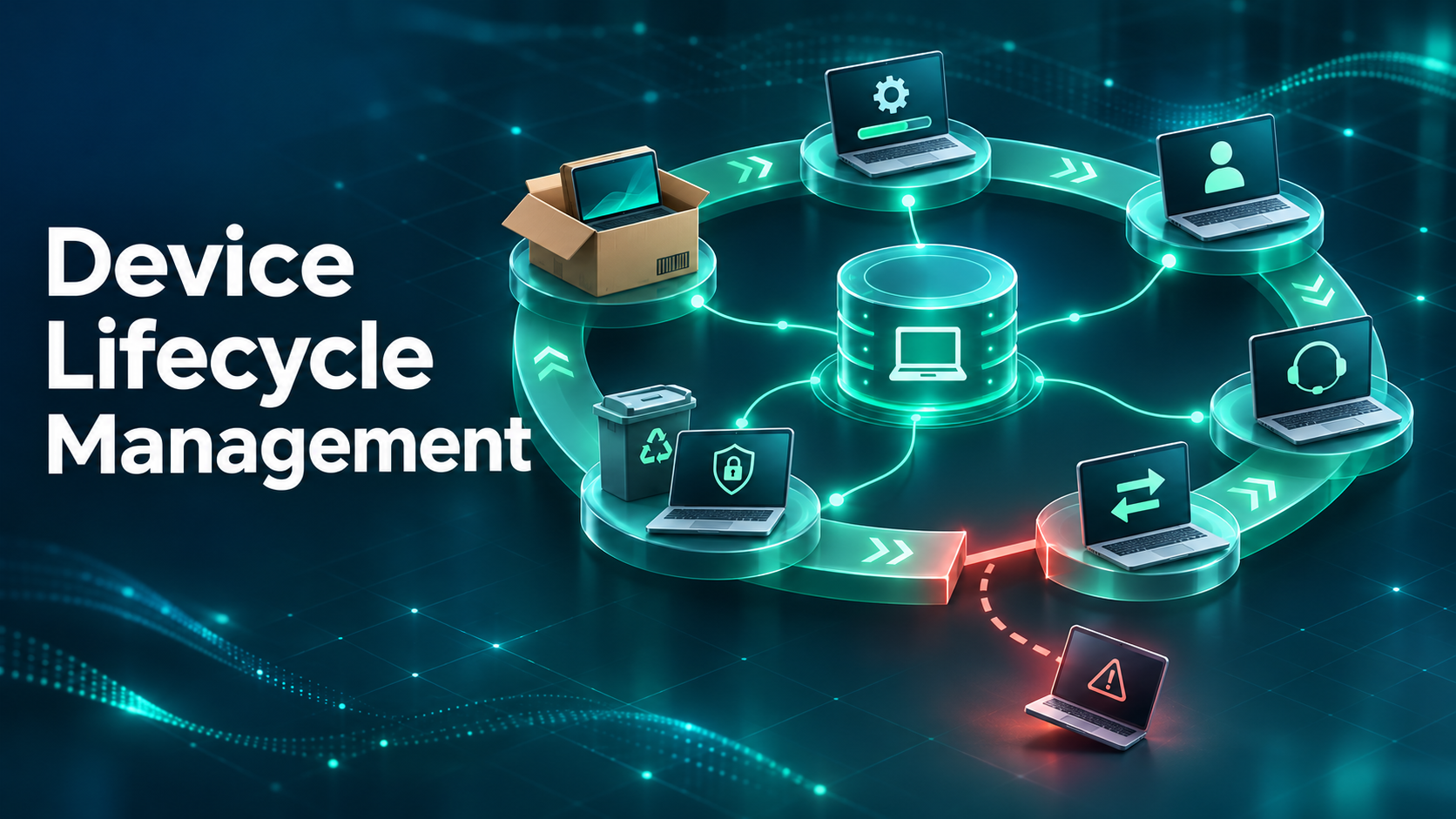
Figure 1. Devices rarely go missing inside a stage. They go missing in the handoffs between stages, when the device moves and the record does not.
The four handoffs where devices go missing
1. Stockroom to first user. A device is provisioned and left on a desk, mailed to a remote starter, or handed over by whoever was nearby. If the assignment is recorded later, or not at all, the device exists in the stockroom on paper and on someone's desk in reality. Automate the assignment as part of onboarding, so the device is linked to the new hire in the same flow that creates their accounts.
2. User to user. Someone leaves a team, and their laptop is passed to a colleague who needs one urgently. It is practical and fast, and it is invisible to every system. Make reassignment a request that takes seconds, so it is easier to log than to skip.
3. User to repair. A device goes to a repair vendor or the service desk shelf, and a loan device goes out in its place. Now there are two devices in motion and two records to update, and usually one of them is not. Tie the loan and the repair to the same ticket, so closing one prompts the other.
4. User to leaver. This is the costliest handoff to get wrong. An employee leaves, and recovering their device depends on someone remembering to ask, a prepaid shipping label arriving, and the device actually being returned. Many organizations lose a meaningful share of devices here. Recovery works best when it starts automatically from the offboarding record, with reminders and a clear status, which is part of why offboarding does not end on the last day.
The pattern across all four is the same: the physical handoff is easy and the record update is extra work. Anything that makes the record update a side effect of the request people already have to make closes most of the gap.
Retirement, data and the last record that matters
When a device reaches the end of its life, two things have to be proven: that the data on it was destroyed, and where the device went. Media sanitization guidance such as NIST Special Publication 800-88 sets out the methods (clearing, purging or physically destroying storage) and the documentation that goes with them. Keep the sanitization record and the disposal certificate against the device's asset record, since that pairing is what an auditor will ask for.
Refresh timing deserves the same discipline. Many organizations replace laptops every three to five years, but replacing by age alone ignores devices that fail early and devices still performing well. Basing refresh on age, repair history and performance together usually lowers cost and complaints at the same time.
What good device lifecycle management looks like
- One record per device, linked to its user, its tickets and its stage, rather than spread across procurement, endpoint management and spreadsheets.
- Handoffs triggered by events such as a new hire, a team change, a repair or a departure, rather than by someone remembering.
- Reconciliation against reality: devices that stop checking in to management tools are flagged and chased, not left on the books.
- Clear ownership of each stage, so procurement, IT and HR know which handoff is theirs.
Where Rezolve.ai fits in the lifecycle
We build this layer, so take the next paragraph as a vendor's argument.
Rezolve.ai handles the requests that make up the handoffs. When a new hire starts, the joiner-mover-leaver flow on the ITSM system of record can request, assign and track the device alongside the accounts and access. Replacements, loaners and reassignments become a quick request to Agentic Sidekick, which routes the approval and updates the record as part of the same step. When someone leaves, device recovery starts from the same offboarding record rather than a separate checklist. The workflows and automations that connect these steps to your asset and endpoint tools can be built in Rezolve Creator Studio.
The devices that go missing are rarely lost through carelessness. They are lost in the handoffs, when the record is the one step nobody had to take. Make the record part of the request, and most of them stop going missing.
Learn more about joiner-mover-leaver on the Rezolve.ai system of record.
Last updated on November 17, 2026
Get summary with:
See the agentic service desk in action
Watch Rezolve.ai autonomously resolve real IT and HR tickets: governed, auditable, glass-box.
Frequently asked questions
What is the difference between device lifecycle management and IT asset management?
IT asset management covers every IT asset, including software licenses, cloud subscriptions and infrastructure, mostly from a financial and contractual point of view. Device lifecycle management focuses on physical endpoints such as laptops, phones and tablets, and on the operational steps of moving each one from purchase to disposal.
How long should a company keep laptops?
Many organizations plan on a three- to five-year refresh cycle, but age alone is a weak signal. Combining age with repair history, performance and warranty status identifies the devices that genuinely need replacing and avoids replacing ones that still work well.
How do you recover devices from remote employees who leave?
Start recovery automatically from the offboarding record, send a prepaid return kit with clear instructions, track the shipment against the device's asset record, and follow up on a schedule. Recovery rates are highest when the process starts before the last day rather than after it.
What should happen to data on a device before disposal?
The storage should be sanitized using an approved method, such as cryptographic erasure, overwriting or physical destruction depending on the device and its sensitivity, and the sanitization should be documented against the device's asset record along with the disposal certificate.
What is the most common reason device records become inaccurate?
Informal handoffs. Devices passed between colleagues, swapped during repairs or left with departing employees change hands faster than records are updated. Making each handoff a quick request, ideally triggered by an event such as onboarding or offboarding, keeps the record and reality aligned.