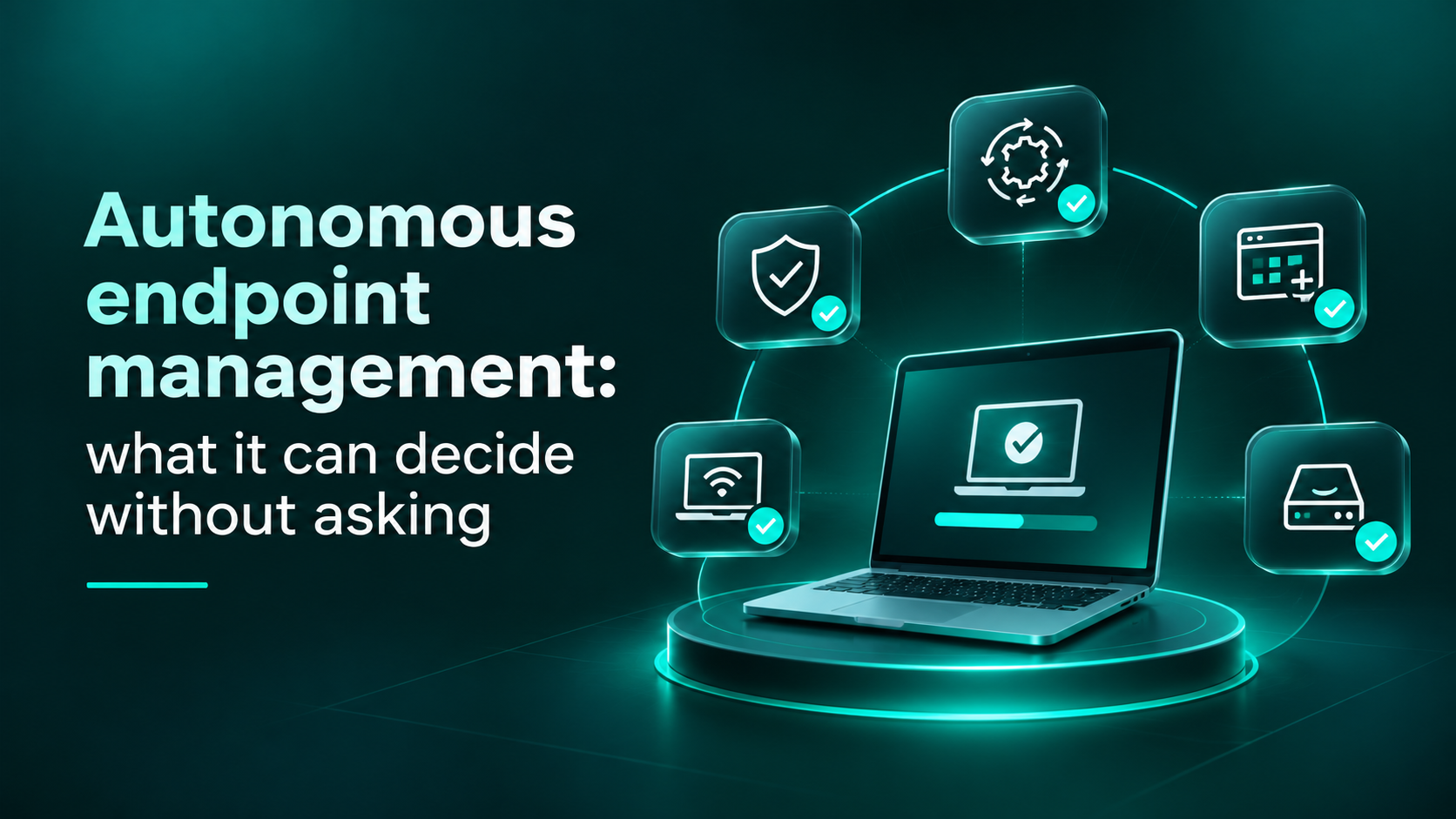
Vulnerability remediation: why the backlog grows faster than the team
Scanners find vulnerabilities faster than any team can fix them, so remediation becomes a prioritization problem long before it is a patching one. How to rank findings by exploitation and exposure, why fixes should run as changes, and what should never be automated.

Key takeaways
- Scanners find faster than teams fix, so remediation is a prioritization problem first.
- Combine severity, likelihood of exploitation, known exploitation and exposure; severity alone sets the wrong order.
- Treat each meaningful fix as a change, with approval matched to risk and a rescan to confirm it.
- Keep risk acceptance, exceptions and critical production changes with people, and automate everything around them.
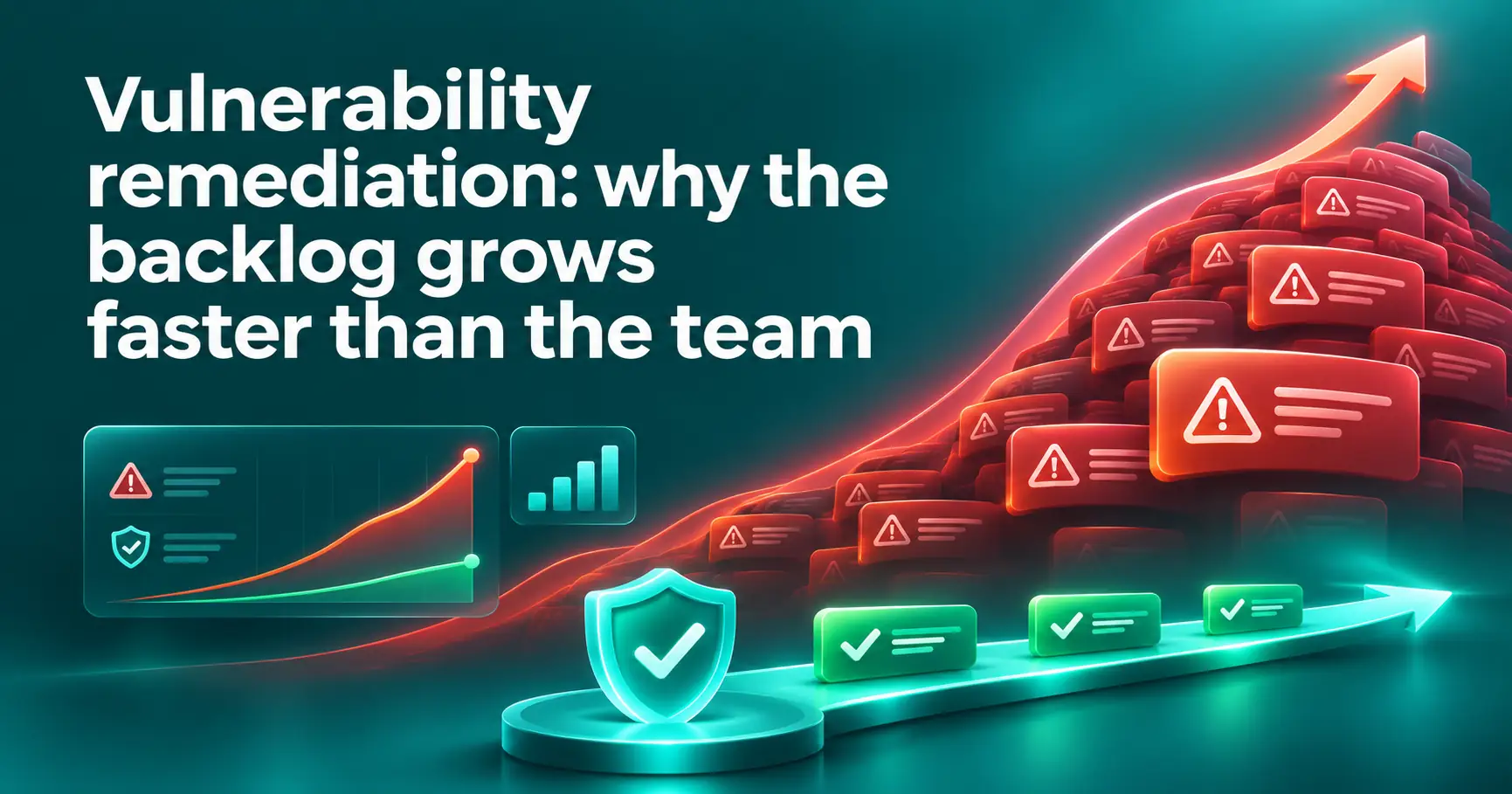
A vulnerability scanner can surface thousands of findings in a single run. A remediation team can close perhaps a few dozen in a good week. The arithmetic means the backlog grows by default, and no amount of extra effort changes it on its own.
That is why vulnerability remediation is a prioritization problem long before it becomes a patching problem. The teams that keep their exposure down are not the ones that fix the most findings. They are the ones that fix the right ones first, and run every fix in a way that does not create a new problem.
What is vulnerability remediation?
Vulnerability remediation is the process of fixing security weaknesses found in systems, applications and devices, usually by applying a patch, changing a configuration or removing vulnerable software. It sits inside vulnerability management, which also covers finding and assessing those weaknesses.
Remediation is one of three possible responses to a finding:
- Remediate: remove the weakness, for example by patching it.
- Mitigate: reduce the risk without removing it, for example by blocking the vulnerable port or isolating the system, when no fix is available yet or the fix cannot be applied straight away.
- Accept: record a deliberate decision, with an owner and a review date, that the remaining risk is tolerable.
All three are legitimate. What is not legitimate is a finding that sits with none of the three.
Why severity scores alone do not set the order
Most backlogs are sorted by severity score, usually the CVSS base score, which describes how bad a vulnerability could be. That is useful and incomplete, because a high share of high-severity findings are never exploited in practice, while some moderate ones are.
Better prioritization combines four signals.
| Signal | What it tells you | Where it comes from |
|---|---|---|
| Severity | How much damage the vulnerability could do | CVSS score from the scanner or vendor |
| Likelihood of exploitation | How probable it is that attackers will use it soon | EPSS, the Exploit Prediction Scoring System |
| Known exploitation | Whether attackers are already using it | The CISA Known Exploited Vulnerabilities catalog |
| Exposure and criticality | Whether the affected system is reachable, and how much it matters | Your own asset and network data |
Figure 1. Severity alone sets the wrong order. Known exploitation, likelihood and exposure narrow thousands of findings to the few that should be fixed first.
A practical rule of thumb: anything already exploited and reachable goes to the top, whatever its severity score. Next come findings likely to be exploited on critical or exposed systems. High-severity findings on isolated, low-value systems can usually wait for the routine cycle.
Remediation is a change, so run it as one
Every fix changes something in a live environment. Patching a database server, upgrading a library or tightening a firewall rule can break the application that depends on it. That is why mature teams treat remediation as change management rather than as a security task done alongside it.
In practice that means:
- A change record for each meaningful fix, linked to the finding it closes, so the audit trail connects risk to action.
- Approval matched to risk. Routine workstation patches can follow a standard, pre-approved change. Fixes on production systems go through normal change approval with a rollback plan.
- Maintenance windows that suit the business, agreed in advance so urgent fixes are not blocked by negotiation.
- Verification after the change, with a rescan to confirm the finding is actually gone.
This is where incident, problem and change management meet: a remediation that breaks a service becomes an incident, and a vulnerability that keeps returning is a problem worth fixing at the root.
What should not be automated
Automation is valuable in remediation, but some decisions belong with people.
Risk acceptance. Deciding that a known weakness will stay open is a business decision with an owner, not a rule a system should apply.
Fixes on critical production systems. Automated deployment to workstations in rings is sensible. Automated changes to the systems that run the business need a human approval and a rollback plan.
Exceptions. When a team asks to delay a fix because it would break something they depend on, someone has to weigh that against the risk.
What automation should do is everything around those decisions: open the change, gather the context, route the approval to the right owner, chase the overdue items and confirm the fix afterwards.
How Rezolve.ai supports remediation work
We build the workflow layer, so read this section with that interest in mind.
Rezolve.ai is not a vulnerability scanner and does not replace one. It runs the people side of remediation. Changes for meaningful fixes can be raised, approved and recorded on the ITSM system of record, with approvals routed to the owners of the affected systems. Exception requests and risk acceptances can run as governed workflows and automations built in Rezolve Creator Studio, so each decision has an owner and a review date. And when a fix affects employees, such as a forced restart or a broken application, Agentic Sidekick handles the questions and the follow-up with the employees affected.
The backlog will always grow faster than the team. The goal is not to empty it. It is to make sure the findings attackers are actually using never sit in it for long.
Learn more about change and approvals on the Rezolve.ai system of record.
Last updated on November 23, 2026
Get summary with:
See the agentic service desk in action
Watch Rezolve.ai autonomously resolve real IT and HR tickets: governed, auditable, glass-box.
Frequently asked questions
What is the difference between vulnerability remediation and mitigation?
Remediation removes the vulnerability, usually by patching or reconfiguring the affected system. Mitigation reduces the risk without removing it, for example by restricting network access to the vulnerable service, and is typically used when a fix is not yet available or cannot be applied immediately.
How quickly should vulnerabilities be remediated?
It depends on exploitation and exposure. Vulnerabilities that are actively exploited and reachable should be fixed as quickly as they can be safely tested, often within days. Lower-risk findings can follow the routine patch cycle. Many organizations set target timelines by risk tier and track how often they are met.
What is EPSS?
EPSS, the Exploit Prediction Scoring System, is a model maintained by FIRST that estimates the probability a published vulnerability will be exploited in the near term. It complements CVSS, which measures potential severity, by indicating how likely exploitation actually is.
What is the CISA Known Exploited Vulnerabilities catalog?
It is a public list, maintained by the US Cybersecurity and Infrastructure Security Agency, of vulnerabilities with evidence of active exploitation. US federal agencies are required to remediate listed vulnerabilities within set deadlines, and many private organizations use the catalog to decide what to fix first.
Can vulnerability remediation be fully automated?
Parts of it can, such as deploying workstation patches in rings and verifying fixes with a rescan. Decisions about risk acceptance, exceptions and changes to critical production systems should stay with people, supported by automation that gathers context and routes approvals.