What Is Agentic AI? A Practical Definition From the Field
Most definitions of agentic AI are either science fiction or vendor fluff. Here is a working definition from a team that ships agents into production: what makes AI genuinely agentic, why tools and governance matter more than the model, and what honest limitations remain.

Key takeaways
- Agentic AI pursues outcomes: it plans, acts through tools, checks results, and knows when it is done
- An agent's quality depends more on its tools and governance than on the raw model behind it
- Real autonomy is governed autonomy: permissions, approval gates, and an audit trail are part of the definition, not an add-on
- Deciding not to act is a legitimate outcome; evidence-grounded restraint is what separates agents from scripts
Agentic AI has become the most used and least defined term in enterprise software. Depending on who is talking, it means anything from a chatbot with a new name to a fully autonomous digital workforce. Both extremes are wrong, and the gap between them is where real decisions about budget, risk, and architecture get made.
I spend my days building and operating agents that do real work in production: triaging tickets, updating configuration records, assigning work to the right people, answering questions grounded in live systems. This is the definition I actually use, and what I have learned matters most once agents leave the demo and meet reality.
The short definition
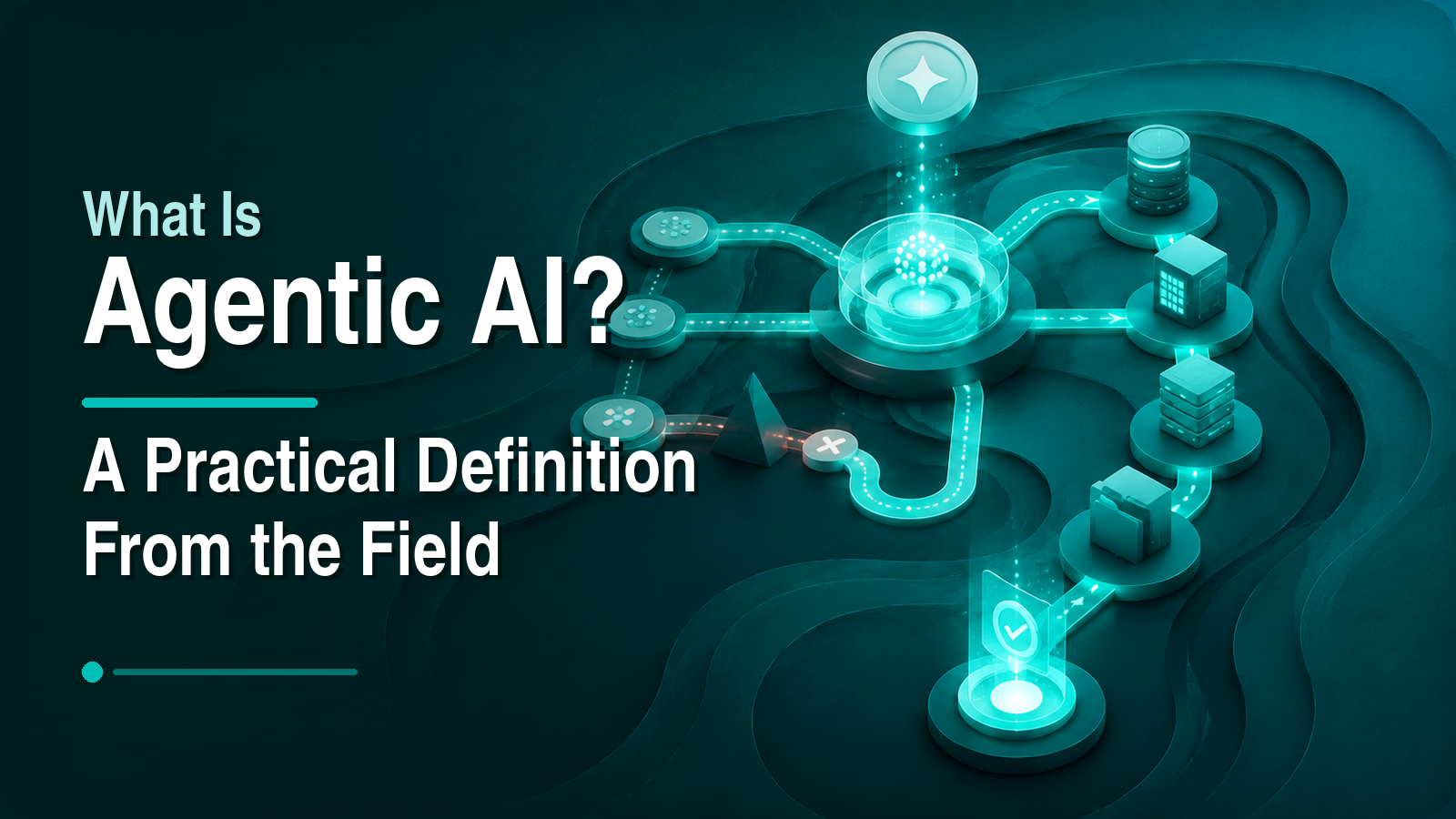
Agentic AI is software that pursues an outcome rather than completing a prompt. You give it a goal and the criteria for success. It plans its own path, acts on real systems through tools, observes what happened, adjusts, and stops when the criteria are met or when it concludes, with evidence, that nothing should be done.
Every word of that definition earns its place. Pursues means the agent keeps working across multiple steps without a person driving each one. Outcome means the target is an end state ("the ticket is correctly categorized, routed to the right specialist, and documented"), not a step sequence. Tools mean the agent's actions are real: it reads and writes the systems your business runs on, it does not just talk about them. And the last clause matters most: an agent that can conclude "no action needed" and explain why is demonstrating judgment. A script cannot do that.
Contrast this with generative AI as most people met it. A generative model answers once: you prompt, it responds, the interaction is over. It has no goal beyond the reply, takes no actions, and carries no responsibility for what happens next. Agentic systems are built on the same underlying models, but the architecture around the model changes what it is: a loop instead of a response, actions instead of suggestions, accountability instead of plausibility.
How an agent actually works
Under the surface, a production agent runs a reasoning loop. It thinks about what the goal requires and what is missing. It plans a small number of concrete next steps. It acts by calling tools: searching a ticketing system, looking up an asset, checking a person's role and workload. It reflects on what the tools returned and measures progress against the success criteria. Then it repeats, until the criteria hold.
Two properties of this loop separate serious systems from demos. First, the plan is the agent's own. Nobody scripted "step three: check the configuration database." The agent decided that because the goal required it. That is what lets one agent handle the messy variety of real requests, where no two tickets arrive quite alike. Second, the loop is inspectable. Each thought, plan, action, and result is recorded. When an agent does something surprising, you can read exactly why. In the enterprise, that record is not a nice-to-have. It is the difference between a system you can trust and one you have to babysit.
Tools are the hands, and they matter more than the model
The public conversation about AI fixates on models. In production, the model is rarely what makes an agent succeed or fail. The tools are.
A tool is a capability the agent can invoke: search these tickets, update this record, look up this person, change this asset's status. Open standards such as the Model Context Protocol (MCP) now let agents connect to systems in a consistent way, which is why the industry is converging on them. But connectivity is the easy part. The hard-won lesson is that tool quality determines agent quality.
A good tool accepts the way people and models actually phrase things, resolves names to the identifiers systems require, validates input before writing anything, and returns errors that teach. When a search finds nothing, a good tool says why and suggests what to try instead, because an agent that receives a bare empty result will conclude the thing does not exist. When a list is long, a good tool says "there are more results" explicitly, because silence reads as completeness. Every one of these details changes agent behavior more reliably than a bigger model does. Our internal shorthand is blunt: make the tools smart so the agent does not have to be a genius. Teams that invest there ship agents that work. Teams that bolt a model onto raw APIs ship demos.
Judgment is the point, not automation
Classic automation executes rules: when X, do Y, every time. It is fast and consistent, and brittle the moment reality deviates from the rule.
Agentic AI is built for the deviations. Consider a system that must decide whether a new incident belongs to an existing problem record. The right answer is not keyword overlap. It is a judgment: does this incident share the problem's actual root cause and fall within its real scope? A well-built agent reads the evidence, weighs it both ways, links the records when the evidence supports it, and declines when the match is merely superficial, stating its reasoning either way. Superficial similarity is not membership, and a different device does not automatically rule it out.
That is the deeper shift: outcomes over procedures, evidence over pattern matching, and calibrated restraint when certainty is not there. The agents that earn trust in production are the ones that act decisively when the evidence is clear and hold back when it is not.
Autonomy without governance is a liability
Here is the part vendors say quietly, if at all: an autonomous system with write access to your ITSM, HR, and asset systems is a risk surface. Autonomy without governance is not a capability. It is an incident report waiting for a timestamp.
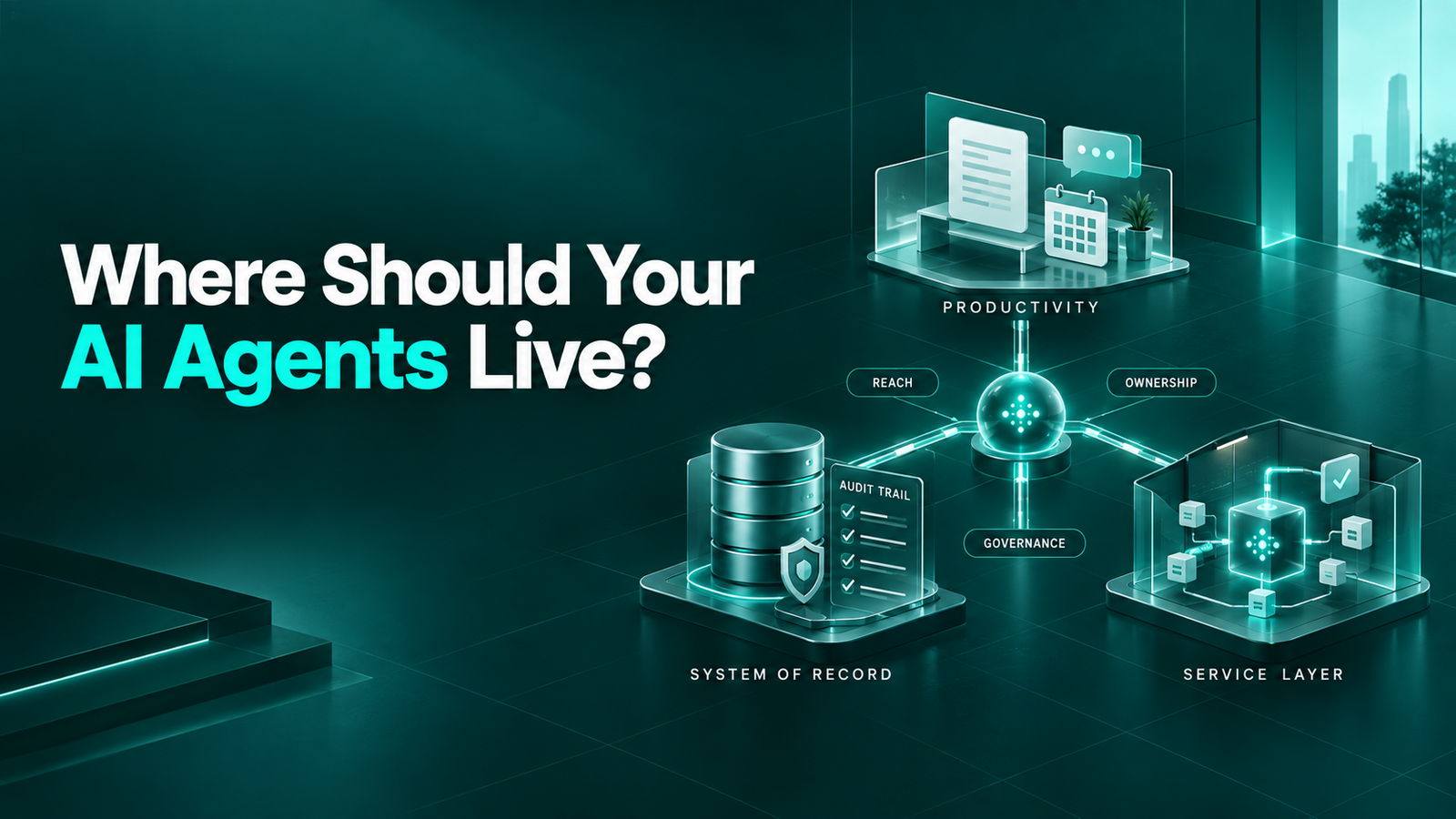
Governed autonomy is concrete, and it has to be built in, not promised: Every action passes a policy gate. Some actions run freely, some require an in-the-moment confirmation, some are routed to a designated approver before anything executes. Policies can be conditional, expressing rules such as reads run freely but writes require approval, or refunds under a threshold are automatic while larger ones need sign-off. Agents act under real, scoped identities rather than god-mode service accounts, so an agent assisting a technician can see and do what that technician may, and nothing more. And every action lands in an audit trail with its reasoning attached.
The test of an agentic platform is not "can it act autonomously?" Models made that table stakes. The test is whether you can say, precisely, when it may act on its own, when it must ask, who approves what, and what happened afterward, and whether the platform enforces those answers rather than politely remembering them.
What agentic AI looks like in a real service desk
In employee service, the pattern shows up at three moments. Before a ticket exists: a conversational agent on Teams, Slack, email, or voice resolves requests directly, grounded in your knowledge and systems. Across Rezolve.ai deployments, roughly 70% of requests are resolved before they ever become tickets. In the seconds after a ticket is created: a triage agent validates and corrects categorization against the system's own metadata, identifies the affected device and links the configuration record, associates related problem records only when the evidence supports it, and routes to the best-fit technician by skills and workload, before any human has opened the ticket. And beside the technician: an assistant inside the workspace that analyzes the ticket on open, surfaces similar resolved cases, answers questions across tickets and knowledge, and executes routine actions with the technician's confirmation, under that technician's own permissions.
None of that is science fiction, and none of it is a chatbot with a new name. It is the loop, the tools, and the governance applied to specific, bounded jobs.
The honest limitations
Agentic AI has real failure modes, and pretending otherwise is how projects die. Language models are unreliable at brute-force quantitative work: give one sixty records and ask which fall outside a threshold, and it may eyeball the data and miss most of them unless the system forces record-by-record rigor or, better, pushes the computation into a tool built for it. Agents are sensitive to phrasing in ways people are not, which disciplined tool design absorbs but does not eliminate. And agents inherit the quality of your data: inconsistent records and missing fields produce confident answers built on sand.
These are engineering problems with engineering answers: verified enumeration instead of impressionistic scanning, computation in tools instead of in the model's head, honest signals when results are partial. But they are exactly why governed rollouts, evidence requirements, and audit trails are not bureaucratic overhead. They are how you find out what your agents actually do.
Where this goes next
The direction of travel is toward specialization and coordination: focused agents that do bounded jobs well, connected through open protocols for tools and for agent-to-agent collaboration, overseen through governance layers that make an entire fleet of agents legible to the people accountable for it. The organizations getting value today are not the ones chasing a single omniscient assistant. They are the ones deploying governed specialists against expensive, repetitive, well-bounded work, and expanding from evidence.
That is agentic AI, defined from the field: software that pursues outcomes through tools, exercises evidence-grounded judgment, and operates inside governance you can inspect. Anything less is a chatbot. Anything more is a promise nobody can keep yet.
If you want to see what this looks like in practice, Agent Studio is where our customers build governed agents in plain language, and a live demo is the fastest way to judge the difference for yourself.
Last updated on August 27, 2026
Get summary with:
See the agentic service desk in action
Watch Rezolve.ai autonomously resolve real IT and HR tickets: governed, auditable, glass-box.
Frequently asked questions
What is the difference between agentic AI and generative AI?
Generative AI produces a response to a prompt and stops. Agentic AI uses the same underlying models inside a loop: it plans toward a goal, takes actions on real systems through tools, evaluates the results, and continues until defined success criteria are met. The difference is architectural, not just a bigger model.
How is agentic AI different from RPA or workflow automation?
RPA and workflow automation execute predefined rules and break when reality deviates from the script. Agentic AI plans its own path toward an outcome and handles variation through judgment, including deciding that no action is warranted. The two are complementary: agents often invoke traditional automations as tools.
Is an AI copilot the same as agentic AI?
A copilot assists a person who stays in the driver's seat, typically drafting, summarizing, and suggesting. Agentic AI can carry a task end to end on its own. Mature platforms offer both, and the same governance should apply either way: scoped permissions, approval gates, and a full audit trail.
Does agentic AI replace service desk staff?
In practice it absorbs the repetitive tier of work: password resets, access requests, routine triage and routing. Technicians spend their time on genuinely hard problems, with agents handling enrichment and routine actions under their supervision. The evidence so far points to reallocation of human effort, not wholesale replacement.
How do you keep agentic AI safe in an enterprise?
Govern it structurally: run agents under scoped identities rather than all-powerful service accounts, gate sensitive actions behind confirmation or designated approvers, express policies as enforceable rules rather than prompt suggestions, and record every action with its reasoning in an audit trail. Autonomy should always arrive paired with governance.
Writes about agentic AI for IT and HR service delivery.
LinkedIn ↗