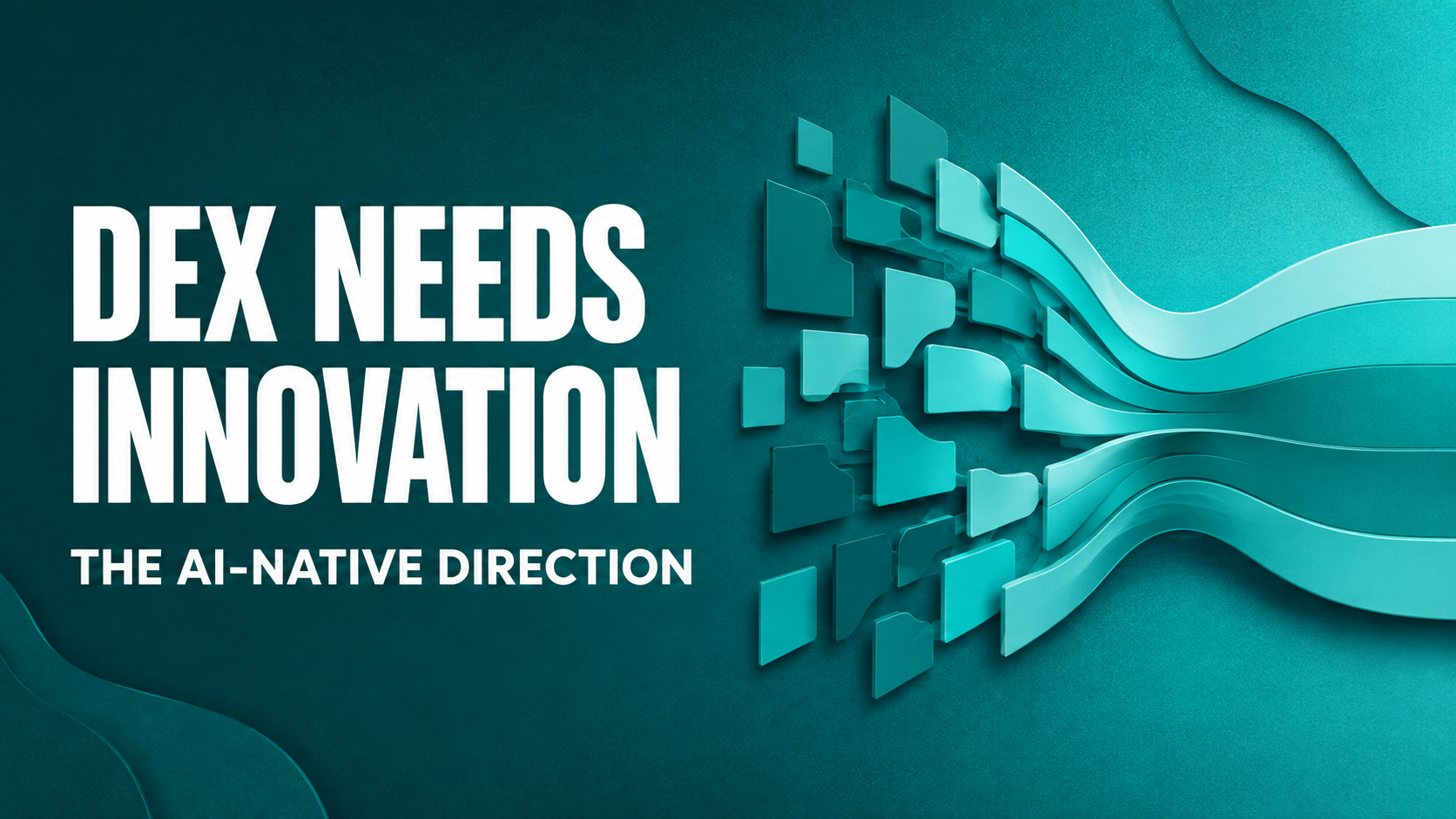
The DEX Market Needs Innovation, And AI-Native Is the Only Direction That Makes Sense
The digital employee experience market is overdue for a rethink. Here's why AI-native, full-stack DEX platforms with agentic capabilities are replacing legacy point solutions, and what that means for IT leaders and technology partners evaluating the next generation of employee experience infrastructure.

The Digital Employee Experience Market Has a Problem
Most organizations have invested heavily in digital employee experience: service portals, ITSM platforms, knowledge bases, chatbots, and endpoint analytics tools. The intent was right. The execution has fallen short.
Employees still wait hours for password resets. Ticket queues still fill with requests that should never become tickets. IT teams still spend the majority of their capacity on repetitive, low-complexity work that adds no strategic value. And despite dashboards full of experience scores and sentiment signals, the underlying friction that degrades productivity every day remains largely unresolved.
The tools that were supposed to solve this problem have largely automated the wrapper around manual processes, not the processes themselves. The result is a DEX market full of platforms that are sophisticated in appearance but incremental in impact.
That is the gap AI-native DEX was built to close.
What DEX Actually Encompasses, And Why Depth Matters
Digital Employee Experience is not a single capability. It spans the full lifecycle of how employees interact with technology at work:
- Endpoint experience: Is the device performing well? Is software current, compliant, and stable? Are crashes, slowdowns, or misconfigurations degrading productivity?
- Application experience: Are the SaaS tools and enterprise applications employees depend on accessible, responsive, and correctly provisioned?
- Service experience: When something breaks, how quickly and completely is it resolved? Is the employee empowered to self-serve, or are they dependent on a queue?
- Onboarding and offboarding: Are new hires fully provisioned on day one? Are access rights cleanly revoked when employees leave?
- Identity and access: Are employees getting the access they need, when they need it, without unnecessary friction or security risk?
- Sentiment and experience signals: Are IT leaders measuring what employees actually feel about their digital environment, not just what the ticketing system records?
Legacy DEX platforms tend to address one or two of these dimensions well. Endpoint analytics platforms like Nexthink, for example, excel at capturing telemetry: device health, application performance, user sentiment scores. That visibility is genuinely valuable. But visibility without action is incomplete. Knowing that 340 employees are experiencing VPN latency above acceptable thresholds is useful. Automatically diagnosing the root cause, pushing a remediation script to affected endpoints, and closing the loop without a single ticket being created is transformative.
The gap between observing a problem and resolving it autonomously is exactly where standalone DEX tools hit their ceiling, and where a full-stack, AI-native platform changes the equation.
Why Legacy DEX Platforms Are Hitting a Ceiling
Traditional DEX platforms were designed in an era when the goal was to digitize the service desk: move requests from phone calls to web forms, from email to ticketing systems. That was meaningful progress at the time.
But digitizing a manual process is not the same as eliminating it. A ticket submitted through a self-service portal is still a ticket. Someone still has to triage it, assign it, resolve it, and close it. The employee still waits. The IT team still carries the load.
Legacy platforms compound this with four structural limitations:
Bolt-on AI. Most incumbent vendors have added AI features to platforms built on pre-AI architecture. The result is a layer of machine learning sitting on top of a workflow engine designed for human routing. The AI can suggest an answer, but the underlying system was never built to act autonomously. Suggestions are not resolutions.
Reactive by design. Conventional ITSM and DEX tools respond to requests. They do not anticipate them. If an employee's VPN client is about to fail, the platform will handle the resulting ticket efficiently. It will not prevent the ticket from being created in the first place.
Visibility without action. Endpoint analytics and experience monitoring platforms generate rich telemetry, but they are built to surface insights to human administrators, not to act on those insights autonomously. The workflow from signal to resolution still runs through a human. At scale, that bottleneck does not disappear; it grows.
Integration as an afterthought. Enterprise environments run on dozens of systems: identity providers, endpoint management tools, HR platforms, productivity suites. Legacy DEX platforms treat integration as a configuration project. Every new connection requires professional services, custom scripting, or an expensive middleware layer. That friction slows time-to-value and limits how broadly the platform can act on behalf of employees.
These are not feature gaps. They are architectural constraints. Incremental updates will not resolve them.
What AI-Native DEX Actually Means
AI-native does not mean a platform that has added a chatbot or a generative AI answer engine. It means a platform where artificial intelligence is the operating model, not a feature sitting on top of one.
In an AI-native DEX platform, the distinction matters at every layer:
Resolution, not deflection. The goal is not to show employees a knowledge article and hope they find their answer. The goal is to resolve the issue: autonomously, completely, without human intervention. An AI-native platform takes action: it resets the credential, provisions the access, restarts the service, updates the record. The employee's problem is gone, not redirected.
Proactive, not reactive. AI-native platforms can monitor signals across the environment (endpoint health, access patterns, application performance), and intervene before an issue becomes a request. The best support interaction is one that never needs to happen.
Built for orchestration. Because AI-native platforms are designed to act across systems, integration is core architecture rather than a configuration layer. Connecting to an identity provider, an endpoint management tool, or an HRIS is not a project. It is a prerequisite the platform was built to handle.
Continuously learning. Every interaction, every resolution, every escalation feeds the model. An AI-native platform gets more capable over time without requiring manual rule updates or workflow redesign. The system improves because it is designed to learn, not because an administrator updated a decision tree.
Agentic AI in DEX: What It Looks Like in Practice
The term "agentic AI" is gaining traction, but it is worth grounding it in concrete use cases: because in the DEX context, agentic capability is not theoretical. It is already reshaping how IT support operates.
Autonomous endpoint remediation. An AI agent monitors endpoint telemetry in real time. When it detects a pattern (elevated memory consumption, a failing disk sector, an application crashing repeatedly), it does not create an alert for a human to investigate. It identifies the probable root cause, executes the appropriate remediation (driver update, process restart, policy correction), validates the fix, and logs the resolution. The employee experiences a brief background process. The IT team sees a closed loop in the dashboard. No ticket was ever created.
Intelligent access provisioning. A new hire joins the organization. The AI agent reads the onboarding trigger from the HRIS, maps the role to the appropriate access entitlements, provisions accounts across identity provider, productivity suite, and line-of-business applications, and sends the employee a single confirmation with everything they need to start. What previously required a checklist, a service request, and multiple handoffs between IT and HR happens in minutes, without human coordination.
Proactive application experience management. The AI agent detects that a cohort of employees in a specific region is experiencing degraded performance in a critical SaaS application. Cross-referencing network telemetry, it identifies a routing issue introduced by a recent configuration change. It rolls back the change, validates performance restoration, and notifies the IT team of what happened and why. The affected employees never noticed a problem.
Conversational self-service with real resolution. An employee messages the AI assistant: "I need access to the Q3 financial reporting dashboard." A legacy chatbot would respond with a link to the access request form. An AI-native agent verifies the employee's identity, checks the approval policy, routes to the appropriate approver if required, receives approval, provisions access, and confirms to the employee, all within the same conversation thread. The interaction takes minutes instead of days.
Offboarding and access hygiene. When an employee's departure is recorded in the HRIS, the AI agent immediately initiates a structured offboarding workflow: suspending accounts, revoking access tokens, archiving data per policy, and generating a compliance audit trail. No manual checklist. No risk of orphaned accounts creating a security exposure weeks later.
Predictive hardware lifecycle management. By analyzing endpoint telemetry across the fleet, the AI agent identifies devices approaching end-of-life based on performance degradation patterns, not just asset age. It generates a prioritized refresh list, cross-references with the employee's role and location, and initiates the procurement and logistics workflow. IT leaders get ahead of hardware failures before they become productivity disruptions.
These are not hypothetical capabilities. They represent the practical application of agentic AI to the DEX problem space, and they are only possible when the platform is built to act, not just to observe or suggest.
The Full-Stack Advantage: Why Standalone Tools Cannot Compete
Understanding why a full-stack AI-native platform outperforms a collection of best-of-breed point solutions requires looking at where the value is actually created.
Consider the workflow for a common scenario: an employee cannot access a critical application on a device that has been flagged for a compliance issue.
In a fragmented tool environment:
- The endpoint analytics platform (e.g., Nexthink) detects the compliance flag and surfaces it to an IT administrator.
- The ITSM platform receives a ticket, either from the employee or created manually by IT.
- The identity platform is accessed separately to investigate access status.
- A technician manually coordinates the remediation: device compliance is addressed, access is restored, the ticket is closed.
- Total elapsed time: hours to days, depending on queue depth and shift coverage.
In a full-stack AI-native platform like Rezolve.ai:
- The platform detects the compliance flag via integrated endpoint telemetry.
- The AI agent cross-references the employee's access profile and identifies the access block.
- It automatically remediates the compliance issue (policy push, configuration correction), restores access, and validates the resolution.
- The employee receives a proactive notification that the issue was detected and resolved.
- Total elapsed time: minutes. Zero tickets. Zero human intervention.
The difference is not incremental. It is structural. And it compounds across every interaction, every day, across the entire employee population.
Standalone DEX tools, even excellent ones, are limited by the boundaries of their domain. An endpoint analytics platform cannot provision access. An ITSM platform cannot push a remediation script. A chatbot cannot update an HR record. A full-stack platform designed for orchestration can do all of these things, in sequence, autonomously, because it was built to act across the entire employee technology environment.
How the Employee Journey Changes
The cumulative effect of a full-stack AI-native DEX platform is not just operational efficiency for IT. It is a fundamentally different experience for the employee.
Day one: The new hire's device is pre-configured, accounts are provisioned, and access to every required system is confirmed before they log in for the first time. Onboarding is a welcome experience, not a bureaucratic obstacle.
Day-to-day: Issues that previously required a ticket (a slow application, a failed authentication, a missing software license), are resolved before the employee is aware of them, or within minutes of a brief conversational interaction. The friction that accumulates over thousands of micro-interruptions each year is largely eliminated.
Access and identity: Employees get the access they need, when they need it, through a natural language request that is fulfilled in real time. They are not navigating approval workflows or waiting for IT to respond to a request submitted three days ago.
Device reliability: Endpoint issues are caught and corrected proactively. Employees are not managing crashes, slowdowns, or compliance warnings, the platform handles them in the background.
Departure: When an employee leaves, the transition is handled cleanly and completely. There is no manual checklist, no risk of overlooked access, no compliance exposure.
The aggregate result is an employee who spends more time on the work they were hired to do, and less time navigating the friction of enterprise IT. That is what digital employee experience is supposed to deliver. It is what a full-stack AI-native platform actually delivers.
The Minimum Standard Has Moved
For years, L0 and L1 automation (self-service password resets, FAQ deflection, basic ticket routing), represented the leading edge of DEX ambition. Organizations that achieved meaningful L0/L1 deflection were considered mature.
That benchmark is no longer the ceiling. It is becoming the floor.
Leading service organizations
Last updated on August 27, 2026
Get summary with:
See the agentic service desk in action
Watch Rezolve.ai autonomously resolve real IT and HR tickets: governed, auditable, glass-box.