What ServiceNow's Q2 Margin Disclosure Signals About the Future Cost of Enterprise AI
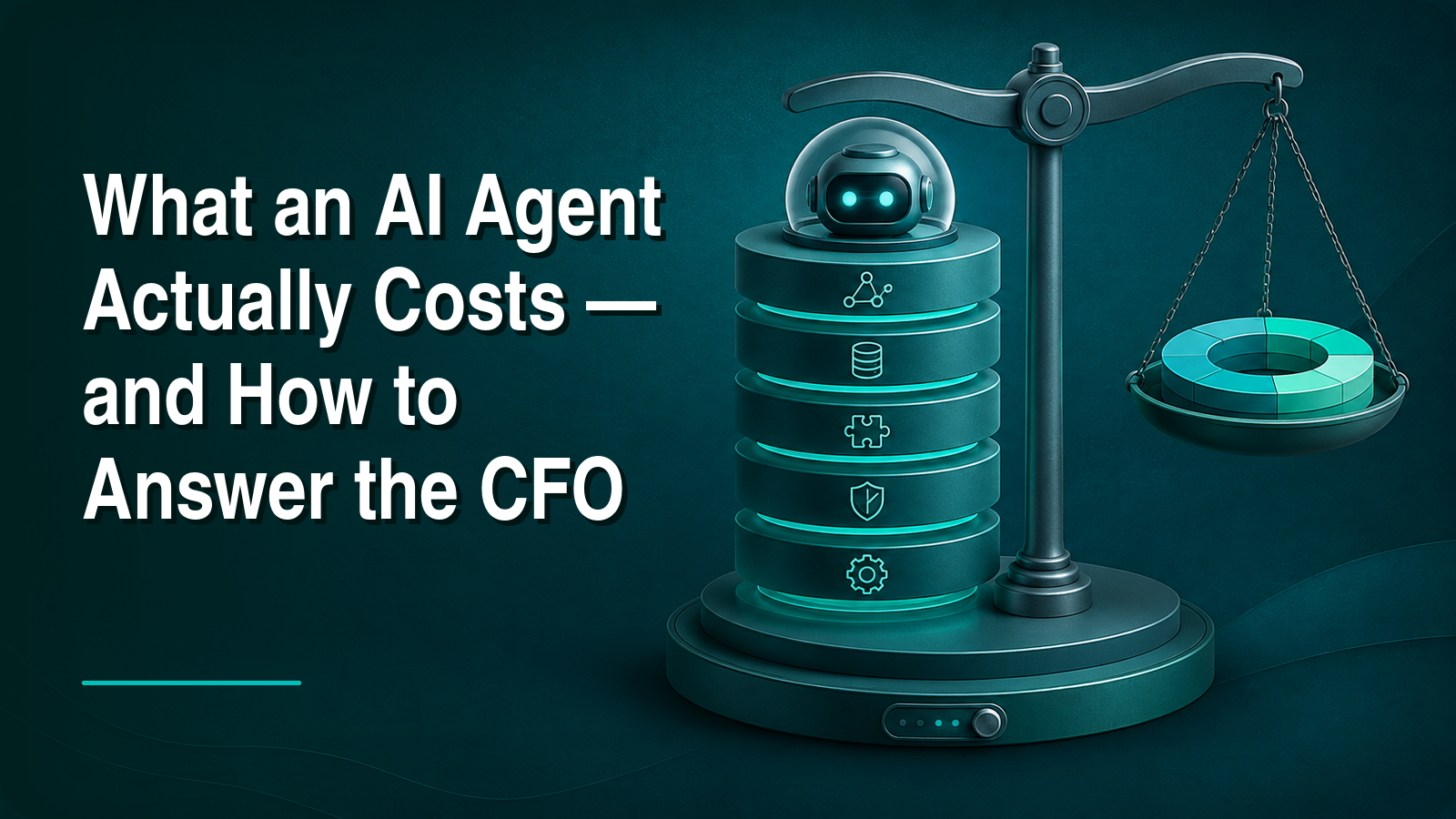
ServiceNow beat on nearly every line in Q2 2026: except gross margin, which fell on AI consumption and hyperscaler costs. That single line is the clearest public signal yet of where enterprise AI pricing is heading, and what buyers should do about it.


Key takeaways
- ServiceNow's Q2 2026 non-GAAP subscription gross margin fell 250 basis points year over year to 80.5%, with total non-GAAP gross margin down three points to 78%, attributed to accelerating AI consumption and hyperscaler adoption
- Full-year non-GAAP subscription gross margin guidance now sits at 81%, down from the 82% originally guided and the 84.5% posted in Q4 2024
- AI ACV crossed $1 billion in the quarter: proof that AI revenue and AI cost are now scaling together, which is exactly why hybrid seat-plus-consumption pricing is spreading
- Vendors have three levers to fix AI margin: raise prices, meter usage, or lower cost per resolution. Two of the three land on the buyer's invoice
- Buyers should evaluate cost per resolved request, not cost per seat or per assist, and demand consumption visibility before signing
ServiceNow's Q2 2026 results, reported on July 22, were strong almost everywhere you looked. Subscription revenue of $3.877 billion grew 24.5% year over year. Current remaining performance obligations came in at $13.2 billion, beating guidance by roughly 200 basis points in constant currency. Non-GAAP operating margin hit 29.5%, three points above the company's own guide. There were 123 deals worth more than $1 million in net new ACV, up nearly 40%. Renewal rate held at 98%.
And then there was one line that went the other way.
Non-GAAP subscription gross margin fell 250 basis points year over year, from 83% to 80.5%. Total non-GAAP gross margin declined three points to 78%. (The GAAP subscription figure fell further, to 73.5%, but a large share of that additional gap is amortization of purchased intangibles from the Moveworks, Veza, and Armis acquisitions, not AI cost, so the non-GAAP numbers are the cleaner read on the AI story.) Management's explanation was direct: accelerating customer AI adoption and a heavier mix of hyperscaler-hosted workloads. For the full year, ServiceNow now guides non-GAAP subscription gross margin to 81%: down from the 82% it originally guided for 2026, a figure it had already trimmed to 81.5% after Q1, and well below the 84.5% it posted as recently as Q4 2024.
That single line is more informative about the next two years of enterprise AI pricing than any keynote you will sit through this fall. Here is why.
The number that matters is not the margin. It's the direction
An 80.5% subscription gross margin is still an excellent business. Nobody at ServiceNow is panicking, and nobody should be. The interesting part is the slope.
Non-GAAP subscription gross margin has stepped down in sequence, 84.5% in Q4 2024, 83% in Q2 2025, 82.5% in Q4 2025, 80.5% now, and every step has the same explanation attached: AI usage is growing, and AI usage costs real money. Unlike the software economics of the last twenty years (build once, serve the next customer for approximately nothing), every agentic resolution consumes tokens, GPU time, retrieval calls, and orchestration overhead. The marginal cost of serving a customer is no longer close to zero.
What makes ServiceNow's disclosure unusually useful is that it comes attached to a revenue number that proves the demand is real. AI ACV crossed $1 billion in the quarter, on the way to a stated $1.5 billion target by year end, with management noting they are tracking ahead of the goal for AI to reach 30% of ACV by 2030.
So this is not a story about an experiment that got expensive. It is a story about a product line working so well that its cost of goods became visible in the consolidated financials of a company doing roughly $16 billion in annual subscription revenue. AI revenue and AI cost are scaling together, and that is the structural fact every enterprise buyer now has to plan around.
ServiceNow is not an outlier. It is the clearest data point.
Zoom out and the pattern is consistent across the category.
ICONIQ's early-2026 benchmarking put average gross margin for AI products at roughly 52%: improving from 41% in 2024 and 45% in 2025, but still far from the 80%-plus that defined the previous decade of cloud software. Coverage of Bessemer's State of AI research has placed LLM-native company gross margins around 65%.
The underlying arithmetic is not complicated. The SaaS CFO's worked example: take an $80-per-seat product at 80% gross margin, bolt on an AI assistant that adds roughly $15 per seat in inference, routing, and supporting infrastructure, and the margin on that seat drops toward 65% without a single change to the price tag.
Salesforce disclosed Agentforce ARR of $800 million against nearly 20 trillion tokens processed. GitHub Copilot moved to usage-based billing in June 2026. ServiceNow itself is transitioning from a purely seat-based model to a hybrid of license plus consumption, a shift we covered in detail in our breakdown of ServiceNow's 2026 pricing and billing changes and in what "AI included" actually means across the Foundation, Advanced, and Prime tiers.
None of these are coincidences. They are the same pressure surfacing through different pricing pages.
Three levers, and two of them are your invoice
When a vendor's AI cost of goods rises, there are exactly three things they can do about it.
Lever one: raise prices. Straightforward, unpopular, and constrained by competition. Rarely sufficient on its own.
Lever two: meter consumption. Move the variable cost off the vendor's balance sheet and onto the customer's. This is what hybrid pricing is: seats for the predictable part, consumption units for the part that scales with usage. It is a rational response to a real cost, and it is spreading fast. It also transfers the forecasting risk directly to you. In a per-seat world, adoption was free once the seat was purchased. In a consumption world, the better the AI works, the more you pay, which is a genuinely strange incentive to hand a service desk leader whose entire job is driving adoption.
Lever three: reduce the cost of each resolution. This is the only lever that does not land on the buyer's invoice, and it is an architecture problem rather than a pricing problem.
ServiceNow's leadership pointed squarely at lever three on the call. CFO Gina Mastantuono framed the compression as a near-term headwind that becomes a mid-term tailwind as hyperscaler costs come down and token optimization matures. Amit Zavery added that as large language models commoditize and converge in capability, cost optimization across models becomes straightforward.
We think that is broadly right, and it is worth being precise about why, because the same logic tells buyers what to look for.
Why architecture, not model choice, decides the cost curve
The instinct when inference bills rise is to shop for a cheaper model. That helps, but it is the smaller half of the problem.
The larger half is how many model calls a resolution requires in the first place, and how expensive each of those calls needs to be. A system that routes every request (password reset, laptop order, PTO balance lookup), through a single frontier reasoning model is paying premium prices for questions that a small, well-grounded model answers correctly. A system that retrieves badly forces the model to reason its way around missing context, burning output tokens to compensate for a retrieval failure. A system with vague tool definitions makes the model deliberate about which action to take instead of simply taking it.
This is the argument we made in Choosing the Right LLM for Grounded RAG Without Overpaying for Reasoning and in AI Benchmarks Are Grading the Wrong Thing: when retrieval is clean and tools are well-specified, you do not need the most expensive model in the catalog. The intelligence can live in the plumbing.
It is also why Sidekick is built as eight specialized agents reasoning over one shared conversation rather than one monolithic prompt loop. Specialization is not only an accuracy decision. It is a cost decision. A narrowly scoped agent with a clear job, good grounding, and precise tools converges in fewer tokens than a general agent asked to figure out what kind of problem it is looking at.
What this means for how you buy in 2027
The practical implication of ServiceNow's disclosure is that cost per seat and cost per assist are both becoming the wrong unit of measure. The unit that matters is cost per resolved request.
A few things to take into your next renewal or evaluation:
- Price the AI you will actually consume, not the tier label. Model your last twelve months of ticket volume against the vendor's consumption meter. A summary, a drafted reply, and an end-to-end agentic resolution consume very differently.
- Ask what happens when you exceed your allowance. Get overage rates, rollover terms, and the specific unit definition in writing.
- Ask who absorbs model cost changes. If the vendor's costs fall, and the trajectory of per-token pricing suggests they will, does any of that reach your invoice, or does it stay with the vendor as margin recovery?
- Demand consumption visibility. Someone in your organization now needs to watch an AI meter the way FinOps teams watch cloud spend. If the platform cannot show you where consumption is going by workflow, you cannot manage it. This is the operational side of governing enterprise AI agents.
- Separate resolution from volume. The cheapest token is the one you never spend. Requests that get resolved at the point of ask never enter the queue, never generate an agent-assist call, and never accrue handling cost.
That last point is the one most buyers underweight. The AI cost conversation is usually framed as "how do we make each AI interaction cheaper." The bigger lever is reducing how many interactions the system has to have at all: which is a knowledge, grounding, and automation-discovery problem more than an inference problem. DeskIQ exists for precisely this reason: it clusters your ticket history into ranked automation opportunities with projected impact, so the work you automate next is the work that actually costs you the most.
Where Rezolve.ai fits
We are not going to pretend Rezolve.ai is exempt from the physics here. Every AI vendor pays for inference, us included. What differs is the architecture, and therefore the shape of the cost curve, and what we choose to expose to customers rather than hide behind a meter.
Sidekick resolves roughly 70% of requests before they become tickets, meeting employees in Teams, Slack, email, and voice with grounded, cited answers and the ability to execute the fix. Agent Assist handles triage, summaries, similar-ticket search, and drafted replies for the queue that remains. Agent Studio lets teams build governed, approval-gated agents in plain language or clone from a 50-agent marketplace, without gating automation creation behind a top-tier SKU. And because Rezolve.ai runs on a true ITSM system of record, standalone or alongside ServiceNow, evaluating an AI-first service desk is not automatically a rip-and-replace decision. Our guide on moving beyond ServiceNow without losing governance walks through what that migration path looks like in practice.
The governance layer matters here too, and not only for compliance reasons. A glass-box system that shows which agent did what, on which grounded source, under which approval gate, is also a system that can show you where your consumption is going. Opacity and cost surprises tend to arrive together.
Organizations including JLL, which runs Ask Ethics on Rezolve.ai across roughly 100,000 employees in 80-plus countries, and TotalEnergies Denmark, whose first HR chatbot answers in about 30 seconds around the clock, run employee-facing AI on the platform today. Black Angus Steakhouse cut after-hours IT dependency from 90% to 10%. MyEyeDr resolves in roughly 10 minutes, with about 30% of issues never becoming a ticket at all. The platform is rated 4.8/5 on G2 and carries SOC 2 Type II, ISO 27001, GDPR, and HIPAA-ready credentials. You can read the full write-ups in our customer stories.
Bottom line
ServiceNow's Q2 was a good quarter with an honest footnote, and the honesty is the useful part. A company at that scale disclosing 250 basis points of subscription gross margin compression and naming AI consumption as the cause is the clearest public confirmation yet that intelligence has a unit cost, that the cost is material, and that it will be priced somewhere.
Management is probably right that the pressure eases: hyperscaler economics improve, models commoditize, routing gets smarter. But "eases eventually" is a shareholder timeframe. Your renewal is on a calendar.
The buyers who come out of the next two years well will be the ones who stopped comparing seat prices and started comparing cost per resolved request, who insisted on consumption visibility before signing rather than after the first overage, and who invested in resolving requests at the point of ask instead of paying to process them further down the queue.
If you want to see what that looks like against your own ticket data, book a demo or review pricing. If you are earlier in the evaluation, our roundup of ServiceNow alternatives for 2026 is a reasonable place to start.
Last updated on August 27, 2026
Get summary with:
See the agentic service desk in action
Watch Rezolve.ai autonomously resolve real IT and HR tickets: governed, auditable, glass-box.