Agentic AI to eliminate change risk before it reaches production
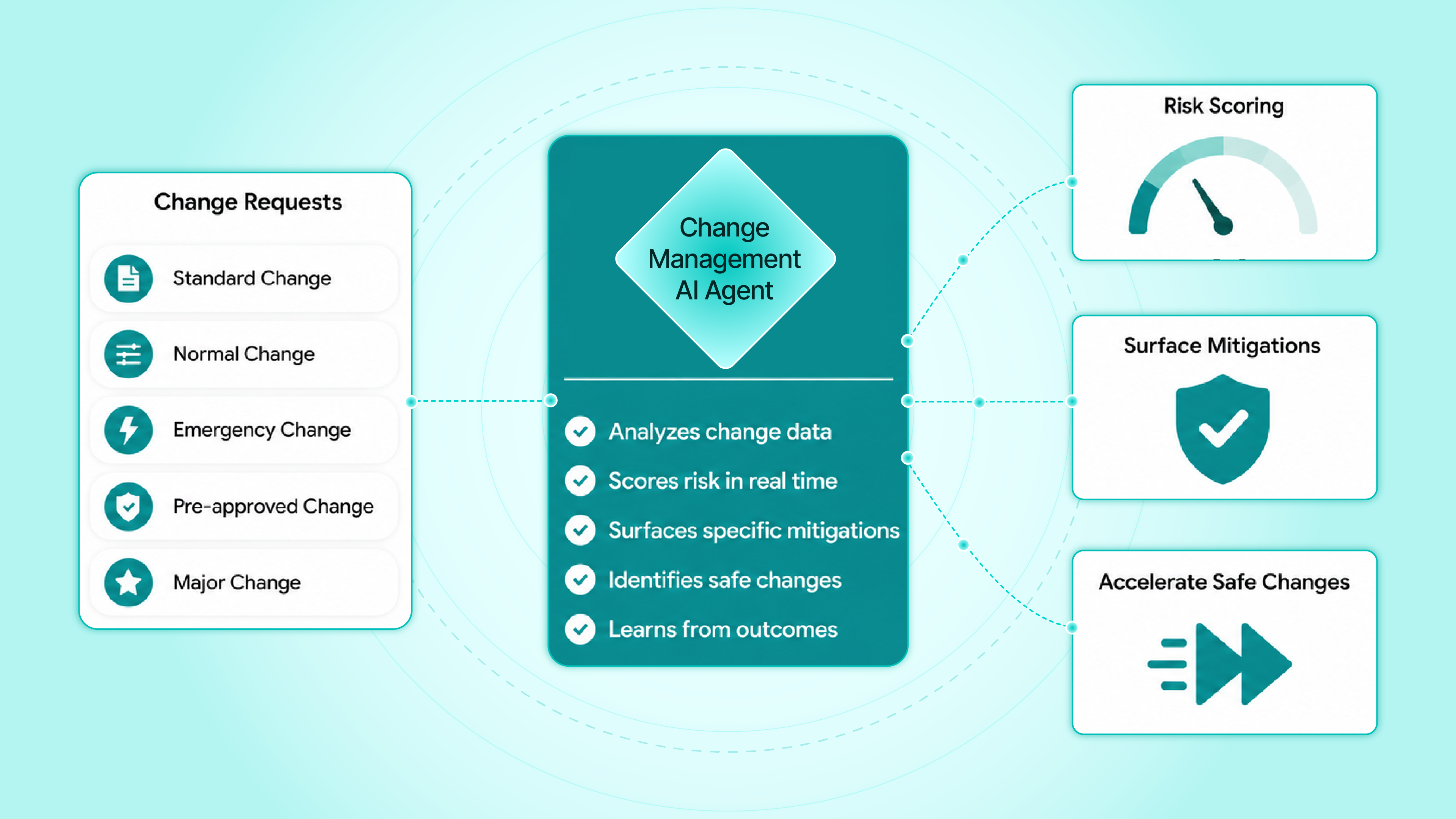
An AI agent that scores every Change Request in real time, surfaces specific mitigations for each risk signal, and accelerates proven safe changes past the CAB review queue automatically.
.png)
AI built into every stage of your change workflow

Scores every Change Request across multiple risk signals as it is being written

Surfaces specific, actionable fixes before the request is even submitted

Outstanding mitigations highlighted so approvers never miss a gap

AI-drafted review notes and aggregated risk signals ready for CAB discussion

Proven safe change patterns proposed for pre-approval to skip the CAB queue

Groups past changes by outcome to identify what is safe and what carries risk

Flags changes resembling past patterns that caused incidents or rollbacks

Track risk trends and manage Standard Change Candidates from one central view

AI-powered change risk management for streamlined enterprise ops
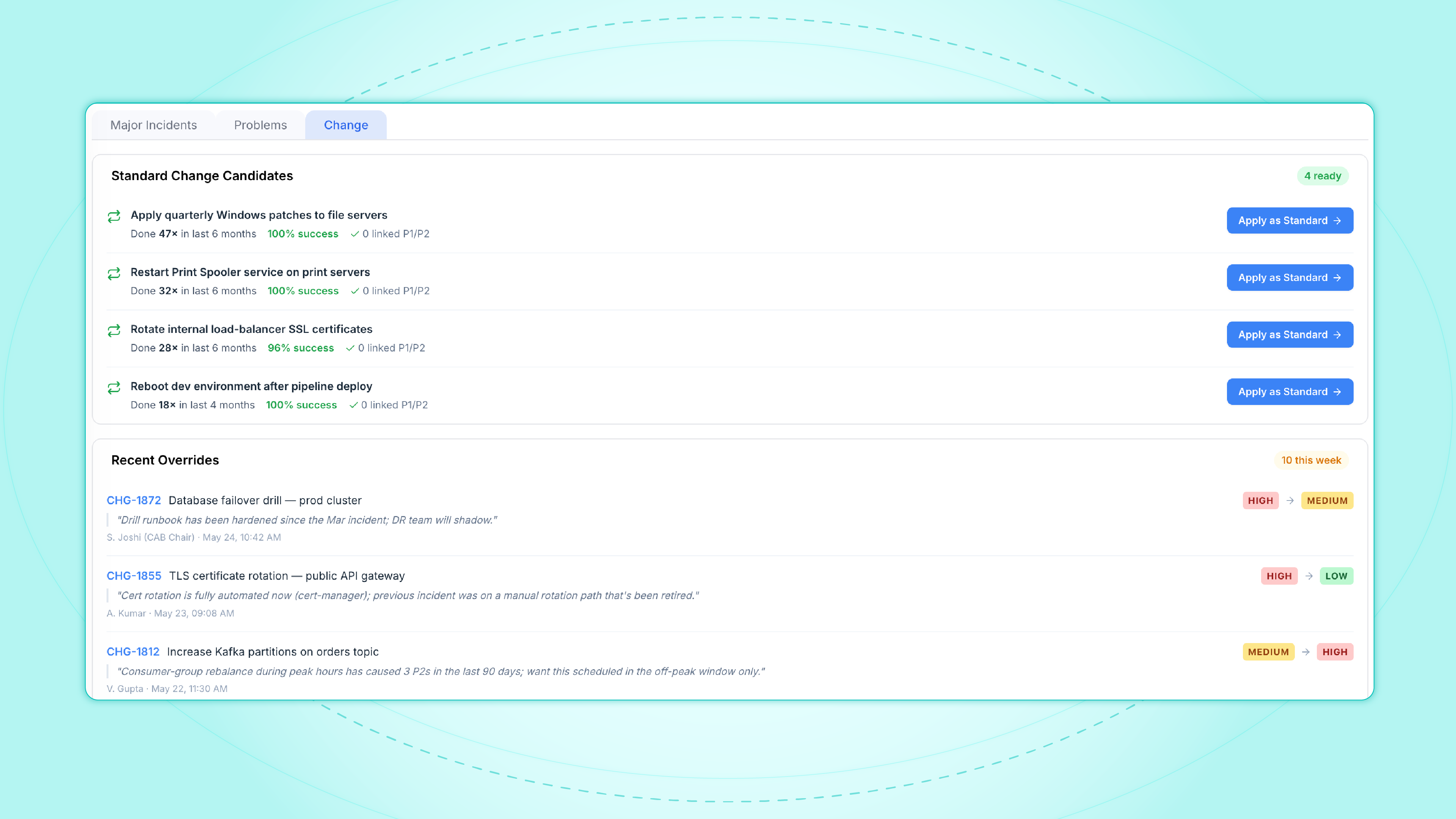
Every Change Request gets scored across multiple signals the moment the requester starts writing. Risk bands and specific mitigations appear inline, so issues are addressed before the request even reaches an approver.
Approvers see the same risk assessment with one key addition: which mitigations the requester already addressed and which ones remain outstanding. No manual cross-checking required.

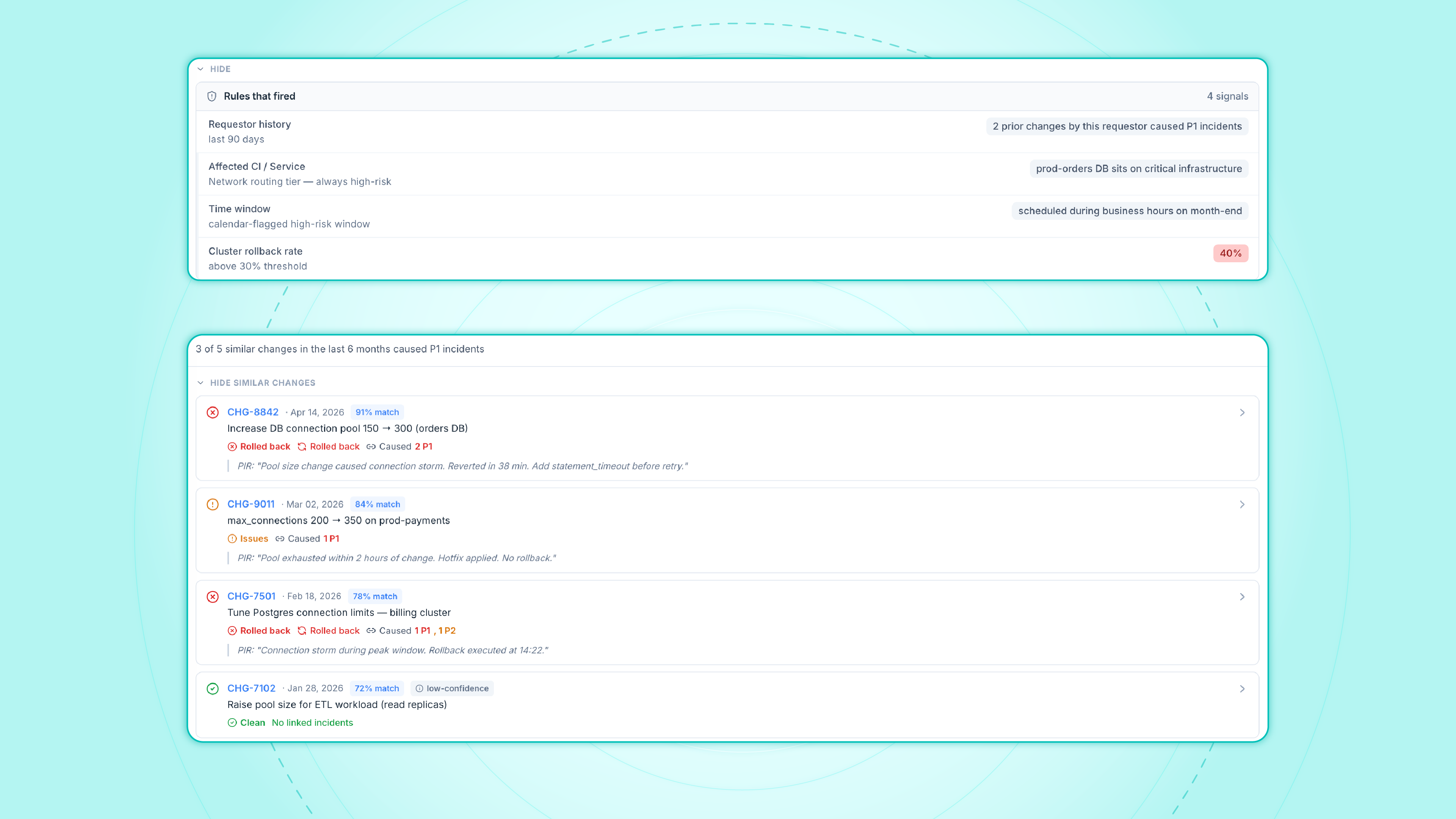
When the same change pattern runs successfully over time without incidents or rollbacks, Rezolve.ai proposes it as a Standard Change Candidate. Approved candidates skip the full CAB review and ship faster.
The Change Management Dashboard gives Change Managers a live view of risk patterns across all active changes, Standard Change Candidates, and historical outcomes, with full control over configuration and policy rules.

Learn, Watch & Explore
Videos, blogs, and webinars to help you discover what’s next in Agentic AI.





FAQs
Change Risk Advisory is an Agentic AI feature that reads every Change Request as it is being written and scores it across multiple risk signals. It gives requesters a clear risk band and specific mitigations to address before submitting. Approvers and CAB chairs see the same assessment with outstanding items highlighted and AI-drafted review notes ready to use.
The AI evaluates each Change Request across approximately ten signals, including historical change patterns, past incident linkage, rollback history, and the specific details of the request itself. These signals combine into a Low, Medium, or High risk band displayed inline on the form, along with the specific mitigations tied to each signal that is flagging risk.
A Standard Change Candidate is a change pattern that the AI identifies as proven safe based on repeated successful execution without incidents or rollbacks. The AI surfaces these automatically on the Change Manager Dashboard with frequency, success rate, and rollback history. A Change Manager reviews and accepts the candidate, after which future identical changes can skip the full CAB review and move faster.
Both capabilities run on the same Agentic AI clustering engine. For incidents, the engine groups similar tickets and surfaces Major Incident or Problem candidates. For changes, it groups similar past changes by outcome and surfaces Standard Change Candidates. The defensive signal works in both directions: when a new change resembles a past cluster that produced incidents or rollbacks, the risk score increases before the requester even submits.
Yes. Tenant admins can toggle individual risk signals on or off, adjust signal weights, set risk score thresholds, and configure runtime policy rules from the configuration page. This allows the scoring model to reflect the specific risk appetite, service environment, and change management policies of your organization without any custom development.
Rezolve.ai is an enterprise Agentic AI solution that deploys specialist AI agents for IT and shared services to reduce cost, accelerate resolution, and elevate employee experience.