.png)
Article Sneak Peak:
In 2025, AI helpdesks and HR chatbots serve distinct but complementary roles in enterprise support. AI helpdesks focus on IT and operations, resolving technical issues, automating workflows, and reducing mean time to resolution (MTTR). HR chatbots, on the other hand, handle employee-centric tasks like leave requests, onboarding, and policy queries with empathy and personalization.
While both use conversational AI and backend integrations, their domain expertise, user experience, compliance needs, and intelligence layers are tailored to their function. Deployed together, they create a unified yet specialized support system - balancing performance and employee well-being in the modern digital workplace.
Introduction
By 2025, AI-driven conversational interfaces will have become the backbone of enterprise support, powering internal service delivery across departments. Whether employees are troubleshooting technical issues or checking their PTO balance, the first point of contact is often not a human; it’s an intelligent virtual assistant. Among the most widely adopted tools are AI helpdesks and HR chatbots.
While both solutions may appear similar at first glance, natural language chats, instant responses, and integrated automations serve distinct purposes. AI helpdesks focus on operational and IT support, whereas HR chatbots specialize in employee-centric services. Understanding the difference between these two systems is crucial for IT leaders, HR teams, and transformation strategists seeking to optimize support efficiency, reduce costs, and enhance the employee experience.
AI Helpdesk: The Digital Frontline for IT Support
An AI helpdesk is a virtual support platform designed to manage IT-related tasks and enterprise workflows through natural language conversations. It combines conversational AI, task automation, and backend integrations to deliver seamless, always-on support. Typically embedded within collaboration platforms like Microsoft Teams or Slack, it acts as the first line of defense against routine IT issues—often resolving them before a ticket is ever logged.
These helpdesks have evolved far beyond simple keyword bots. They now operate as intelligent agents capable of understanding context, interfacing enterprise systems, and executing complex tasks without human intervention.
Core capabilities include:

- Performing identity verification
The system can confirm user credentials securely before performing sensitive tasks, such as resetting access or provisioning services.
- Resetting passwords
Frequently one of the most requested IT tasks, password resets are handled instantly without opening a support ticket.
- Executing backend commands (e.g., restarting services, provisioning software)
Integrated with system management tools, the helpdesk can execute remote actions, such as deploying software or restarting virtual desktops.
- Creating and updating tickets in IT service management systems
For unresolved issues, it automatically logs tickets and adds all relevant context from the chat, saving human agents time.
- Escalating incidents to the right human agents with full context
When escalation is necessary, the agent routes the issue to the appropriate team member, including a complete summary of prior steps taken.
Modern AI helpdesks are proactive, capable of detecting system errors or outages and auto-initiating corrective workflows, reducing both downtime and support costs.
HR Chatbot: The Digital Assistant for Employee Services
An HR chatbot is a specialized virtual assistant that supports employees with human resources-related queries and services. It acts as a front-facing interface to HR platforms, designed with a deep understanding of HR policies, compliance considerations, and employee lifecycle events.
Unlike generic bots, HR chatbots prioritize trust, personalization, and empathetic interactions —especially crucial when addressing sensitive issues, such as parental leave or payroll errors. They enable employees to complete tasks without navigating portals, emailing HR, or waiting days for basic information.
Key functionalities include:
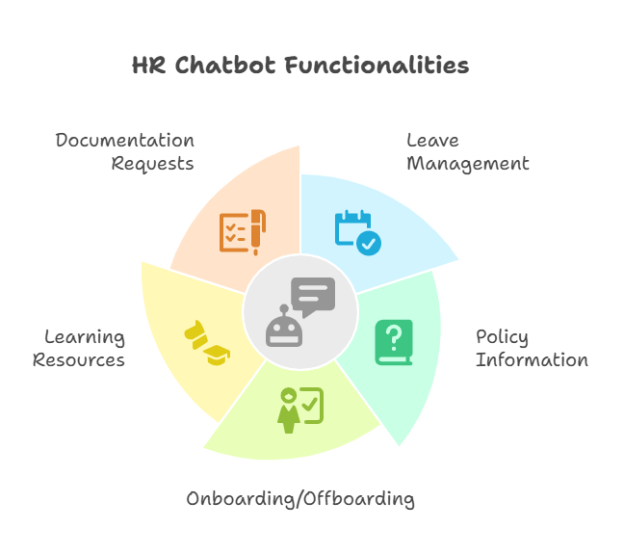
- Check leave balances and submit time-off requests
Employees can instantly view their vacation and sick leave balances, as well as submit PTO requests, directly through the chatbot.
- Get instant answers about policies, holidays, and benefits
Instead of searching HR handbooks, employees ask natural language questions and receive clear, policy-aligned answers.
- Complete onboarding and offboarding tasks
New hires can receive checklists, forms, and training schedules through automated workflows that guide them step by step.
- Access learning and development resources
The bot can recommend training courses, enroll users, or assist employees in tracking progress toward skill-building goals.
- Submit forms and request HR documentation
Employees can use the chatbot to request salary letters, tax forms, or onboarding paperwork without needing to navigate HRIS portals.
Modern HR chatbots alleviate the administrative burden on HR departments, empower employees with self-service capabilities, and enhance service delivery across global workforces.

Key Differences: Domain, Function, and Intelligence
Though both tools rely on similar technologies (like NLP and machine learning), their purpose, scope, and architecture vary significantly. Below are five areas where they diverge:
1. Domain Expertise
- AI Helpdesk: Focuses on IT, infrastructure, technical workflows, and multi-departmental service delivery.
- HR Chatbot: Specializes in human capital services—benefits, policies, compliance, and employee well-being.
2. Workflow Automation
- Helpdesk systems often automate backend operations, such as executing scripts, updating logs, or interfacing with ITSM systems.
- HR chatbots automate people-centered tasks, including benefits elections, onboarding steps, feedback requests, and compliance training enrollment.
3. User Experience
- Helpdesks emphasize speed and precision. Their tone is direct, aiming for rapid resolution.
- HR chatbots prioritize clarity, empathy, and personalization to enhance the user experience. The tone is often warmer and privacy-conscious.
4. Data and Compliance
- AI helpdesks primarily work with technical metadata and device information.
- HR chatbots handle sensitive personal data and must adhere to strict compliance standards (e.g., HIPAA, GDPR, labor laws).
5. Intelligence Layers
- Helpdesks focus on incident triage, system monitoring, and problem-solving logic.
- HR bots emphasize contextual understanding, policy awareness, and sentiment sensitivity.
Integrations: Tailored for Their Ecosystems
The effectiveness of AI helpdesks and HR chatbots largely depends on how well they integrate with the tools and systems employees already use. These integrations enable the AI to take real action, not just answer questions, and ensure the information it provides is accurate, up-to-date, and secure.
AI Helpdesk Integrations
- ITSM Tools
Allow the helpdesk to create, update, and close tickets automatically, ensuring seamless workflow execution across IT support.
- Device Management Platforms
Enable agents to remotely push software updates, restart virtual desktops, or adjust system configurations.
- Monitoring and Observability Stacks
Help detect system anomalies and trigger preemptive workflows, reducing downtime and improving service health.
- Knowledge Bases and Internal Wikis
Power instant answers by pulling relevant documentation and instructions without human intervention.
These integrations enable AI helpdesks to become truly operational, transforming them from FAQ bots into intelligent workflow engines.
HR Chatbot Integrations
- HRIS and Payroll Systems
Provide access to employee data, such as job roles, benefits, or leave balances, enabling personalized and accurate responses.
- Benefits Platforms
Allow the chatbot to guide users through enrollment, plan comparisons, or claims processes directly in chat.
- Learning Management Systems (LMS)
Help the chatbot recommend training paths, track completions, and issue certifications based on job roles or skill gaps.
- Document and E-Signature Tools
Streamline onboarding, offboarding, and document requests without requiring email or manual intervention.
These connections ensure HR chatbots deliver personalized, secure, and compliant support, reducing workload on HR teams while empowering employees.
Impact on Mean Time to Resolution (MTTR)
One of the most significant operational advantages of an AI-powered helpdesk is its impact on Mean Time to Resolution (MTTR). By identifying common issues, routing them instantly, or resolving them autonomously, AI helpdesks can reduce MTTR by 60–80%. This leads to:
- Higher employee productivity
- Reduced IT support costs
- Improved system uptime
Meanwhile, HR chatbots indirectly influence resolution metrics by reducing delays in HR response time and improving self-service efficiency. However, their focus is less on incident timing and more on the quality of employee interaction.
Strategic Business Value
Both AI helpdesks and HR chatbots play a vital role in modern enterprise service delivery, but their impact extends far beyond convenience. Each brings unique strategic advantages that improve operational efficiency, enhance employee experience, and support organizational growth.
AI Helpdesk Benefits
- Reduces Service Desk Workload
By automatically resolving common IT issues (like password resets, software installations, or system access), the AI helpdesk significantly decreases the volume of L1 tickets, allowing IT teams to focus on more complex, strategic problems.
- Improves Resolution Times and Incident Outcomes
With autonomous triage and workflow execution, the helpdesk significantly reduces Mean Time to Resolution (MTTR), enabling employees to return to work more quickly and minimizing productivity losses resulting from downtime.
- Enhances IT Visibility Through Unified Reporting
Every interaction is logged and analyzed, giving IT leaders deeper insight into recurring issues, system bottlenecks, and service gaps—fueling more intelligent resource allocation and problem prevention.
- Scales Support Without Scaling Headcount
AI helpdesks provide consistent, 24/7 support across global teams, eliminating the need for regional support centers or around-the-clock staffing.
- Increases Employee Satisfaction with IT
Quick, accurate resolutions and a frictionless experience lead to higher employee satisfaction scores and fewer complaints about support responsiveness.
HR Chatbot Benefits
- Elevates Employee Experience with Instant, Personalized Support
HR chatbots offer employees quick access to HR services tailored to their role, location, and status, eliminating the need to navigate complex portals or wait for email responses. This builds trust and improves day-to-day satisfaction.
- Streamlines Repetitive HR Tasks
From policy lookups and leave requests to onboarding paperwork, chatbots reduce the burden of routine inquiries on HR teams, freeing them to focus on employee development, culture, and strategic initiatives.
- Improves Responsiveness and Consistency
Responses are immediate, accurate, and compliant—ensuring employees receive the same information, regardless of time zone or department.
- Supports Compliance and Documentation
Every interaction can be tracked, timestamped, and tied to specific workflows, creating audit trails that help meet legal and regulatory standards effortlessly.
- Promotes Scalable and Inclusive Support
HR chatbots make it easier for remote, distributed, or non-native English-speaking employees to access the same level of support, contributing to greater equity and accessibility across the organization.
Together, these platforms form a dual engine of enterprise support: one focused on system uptime and operational excellence, the other on employee empowerment and human-centered services.
In Closing
AI helpdesks and HR chatbots are both essential to delivering intelligent, scalable support in 2025, but they serve very different purposes.
AI helpdesks streamline IT operations, resolve issues faster, and scale technical support without increasing headcount. HR chatbots, by contrast, enhance the employee experience through personalized, empathetic support for people-related needs, such as benefits, leave, and onboarding.
While both use similar technologies, their value lies in their specialization. Helpdesks excel at operational speed and system uptime. HR chatbots foster trust, consistency, and accessibility in HR service delivery.
As AI becomes more embedded in the digital workplace, the most effective organizations will deploy these tools together, each one reinforcing the other. Unified in interface, distinct in intelligence, they form a robust support ecosystem designed for both performance and people.
FAQs
- What is the difference between an AI helpdesk and an HR chatbot?
An AI helpdesk supports IT and operational workflows, handling tasks like password resets, ticketing, and system commands while an HR chatbot focuses on people-related services such as leave requests, onboarding, and policy inquiries.
- Can AI helpdesks and HR chatbots work together in one organization?
Yes, they are often deployed together to provide a unified but specialized support experience. AI helpdesks optimize technical issue resolution, while HR chatbots enhance employee service delivery, improving overall efficiency and satisfaction.
- How do AI helpdesks reduce support costs?
By automating routine IT tasks and resolving common issues instantly, AI helpdesks lower the volume of tickets and reduce the need for human intervention, cutting support costs and improving response times.
- Are HR chatbots compliant with data privacy regulations?
Yes, modern HR chatbots are designed to handle sensitive employee data securely and comply with standards like GDPR and HIPAA, providing audit trails and consistent, policy-aligned responses.

.webp)

.png)









.webp)