

Article Sneak Peak
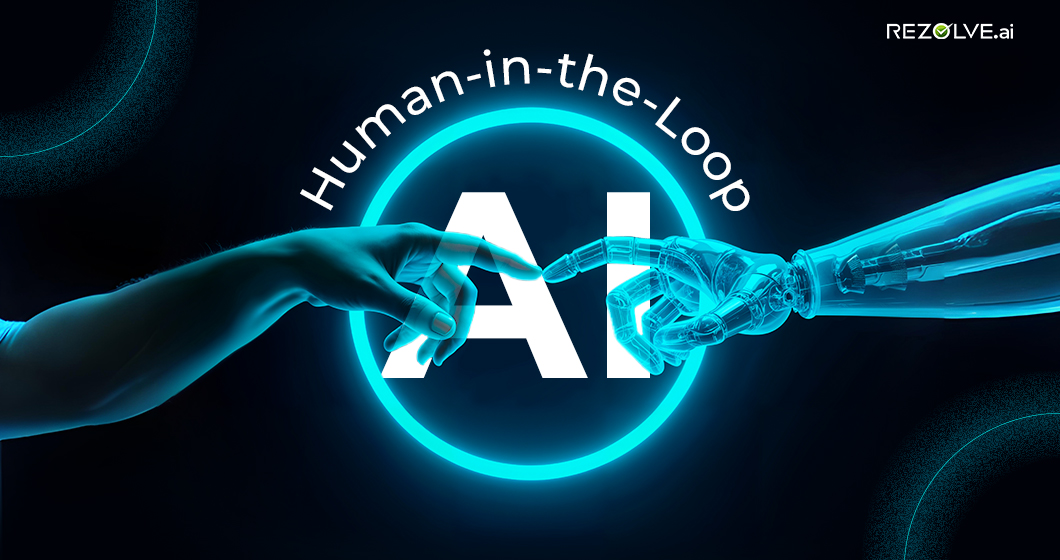
Human-in-the-loop (HITL) AI blends automation with human judgment—crucial for success in 2025 and beyond.
- Reduces critical errors compared to fully autonomous systems—key for compliance and high-stakes decisions.
- Uses tiered oversight, assigning human review based on risk level to optimize resources.
- Confidence-based triggers ensure human intervention when AI certainty drops or anomalies appear.
- 90% of consumers trust companies more when HITL systems are used, highlighting the value of transparency.
- By 2027, 86% of organizations will adopt HITL AI; early adopters report 80% faster reviews with better accuracy.
Introduction
AI agents are reshaping the business world. Organizations plan to deploy agentic AI urgently (35% plan to do it in 2025), with adoption set to soar to 86% by 2027. These numbers express the power of agentic AI to reshape operations in any discipline.
Numbers look promising, yet reality demands attention. AI improves productivity but cannot work independently, especially during business-critical moments. HITL AI steps in here. This system blends human oversight throughout design, development, and deployment. Human-in-the-loop means more than supervision. It creates a partnership where human expertise guides and refines AI systems. This partnership leads to better efficiency while keeping vital safeguards in place.
In this piece, we'll get into why human-in-the-loop AI drives business success in 2025 and beyond. You'll learn how this method helps companies tap into AI's full potential while reducing risks. Understanding how automation and human oversight work together helps build AI systems that improve rather than replace human capabilities.
Why Human-in-the-Loop AI Matters in 2025
The digital world of artificial intelligence is changing faster in 2025, and autonomous AI agents now appear in industries of all types. Companies must understand why human oversight is a vital part of successful AI implementation.
The growing role of autonomous AI agents
Autonomous generative AI agents mark the most important advancement in workplace technology. These agents differ from traditional AI systems that just respond to prompts. They can understand, plan, and execute complex tasks across entire workflows independently. The world has over 1.25 billion knowledge workers. These autonomous systems could affect them all as they evolve from passive tools into active assistants that handle sophisticated processes with minimal intervention.
Human-in-the-loop AI (HITL) creates a partnership between human expertise and AI throughout its lifecycle. HITL doesn't remove humans from the equation. It builds a relationship where human judgment works alongside machine efficiency. This approach matters because:
- Human input improves AI models' accuracy and reliability
- Humans help spot and alleviate algorithmic biases
- Human collaboration helps adapt to changing ground scenarios
- Human involvement builds trust among end-users
Business leaders recognize HITL's value, with 81% thinking it's essential for their organizations. On top of that, 90% of consumers trust companies more when they use human-in-the-loop AI systems.
Key risks of removing human oversight
Companies face substantial risks when they remove human oversight from AI systems. Organizations might gain efficiency at first by replacing human judgment with fully autonomous technologies. However, they end up limiting their ability to work effectively.
"Without meaningful human oversight, AI becomes a powerful tool without a moral compass," notes Manish Sharma, CRO and cofounder of Rezolve.ai. "The most successful implementations don't just automate decisions—they increase human expertise with AI's computational power."
Autonomous systems can also reinforce biases in training data, which raises ethical and legal concerns. Human oversight acts as a vital safeguard. It ensures AI works as intended, reduces collateral damage, and prevents potential misuse. As AI grows more sophisticated in 2025, keeping appropriate human involvement becomes essential for responsible business implementation.
How Human-in-the-Loop AI Improves Business Outcomes
Companies that use human-in-the-loop AI systems see clear improvements in many areas of their operations. These organizations that blend human expertise with AI capabilities report high gains in both efficiency and reliability.
1. Reduces critical errors in high-stakes decisions
Human oversight cuts down error rates in critical scenarios. Healthcare, finance, and autonomous driving need this safety net because mistakes can have serious consequences. Human operators can spot misaligned predictions quickly and teach systems not to repeat these mistakes, which creates a cycle of continuous improvement.
2. Boosts trust and transparency with explainable AI
Explainable AI (XAI) makes AI decisions clear and understandable, which builds vital trust with stakeholders. AI models without clear explanations of their inner workings risk being seen as untrustworthy or illegitimate. XAI brings transparency through key features like trustworthiness, transferability, and informativeness. This helps people understand AI outcomes and take action when needed.
3. Helps meet compliance and regulatory standards
Human-in-the-loop systems help businesses guide through complex compliance requirements as regulatory frameworks change. The European Union's proposed AI Act could fine companies up to €35 million or 7% of global revenue for non-compliance. These systems make sure humans oversee and take responsibility for important AI-related decisions, which lines up with GDPR and similar regulations.
4. Improves model accuracy through human feedback
Human feedback makes AI models perform better. Expert reviews of AI outputs during training help correct errors and guide the learning process. This ensures models learn not just from data patterns but also from human expertise.
5. Supports ethical decision-making in sensitive contexts
Human involvement brings empathy and moral judgment to AI systems. People can find and fix biases in data and algorithms to promote fairness. Different human reviewers in training and testing help spot biased outputs, letting organizations adjust their algorithms as needed.
Implementing HITL AI in Real-World Workflows
The thoughtful implementation of human-in-the-loop AI requires strategies that balance automation with proper human oversight. Teams can maximize both efficiency and safety by incorporating several key approaches into HITL workflows.
Tiered oversight for different risk levels
Organizations can scale human intervention based on potential impact through a tiered approach to AI oversight. Systems with high risks—like those in healthcare, finance, or critical infrastructure—just need thorough human review. Low-risk applications can work with minimal intervention. This risk-based framework helps allocate resources properly. Human experts can focus on scenarios where errors could lead to serious consequences. Many organizations now use governance structures with clear decision-making frameworks to guide these tiered practices.
Confidence-based intervention systems
HITL systems use confidence thresholds to determine when human intervention becomes necessary. The AI system stops for human review when:
- Prediction confidence drops below set thresholds
- Decisions involve high-stakes outcomes
- Unusual patterns emerge
Research shows that humans' self-confidence, not their trust in AI, drives decisions to accept or reject AI suggestions. Well fine-tuned confidence metrics help prevent both over-reliance and under-utilization of AI capabilities.
Training teams for effective human-AI collaboration
Team preparation for AI collaboration extends beyond technical training. Organizations should:
- Integrate HITL processes into existing workflows
- Get tools that encourage effective human-AI interaction
- Monitor continuously for iterative improvements
Using audit trails and explainability tools
Complete logging creates accountability throughout the AI lifecycle. Organizations should set up:
- Input data logging that captures transformations and lineage
- Decision and prediction logs with confidence scores
- User interaction documentation for better accountability
- System and infrastructure monitoring
Without robust audit trails, AI accountability remains a theoretical concept rather than an operational reality. Traceability isn't an afterthought—it's the foundation of responsible AI implementation.
Adaptive autonomy based on context
Advanced HITL implementations adjust autonomy levels dynamically based on context. AI systems can operate independently in familiar scenarios yet ask for human guidance when facing new situations.
How Rezolve.ai merges HITL in support automation
Rezolve.ai blends agentic automation with human oversight at the exact points where risk, ambiguity, or policy sensitivity demand it. The aim is simple: automate the routine end to end, and route exceptions to the right person with full context so decisions are fast, compliant, and auditable.
- Risk‑tiered workflows: Requests are classified by risk and business impact. Low‑risk intents are auto‑resolved, medium‑risk flows run with confidence gates, and high‑risk actions require explicit human approval before execution.
- Confidence and anomaly thresholds: The agent proceeds only when prediction confidence, data quality, and guardrail checks pass preset thresholds. If confidence dips or unusual patterns are detected, the task is paused and sent to a human reviewer.
- In‑channel reviewer queues: Approvals, edits, and escalations happen inside your collaboration hub (Slack or Microsoft Teams). Reviewers see the user’s request, proposed resolution, evidence, and policy notes in one place, then approve, decline, or amend with one click.
- Approval gates for sensitive actions: Anything that touches access, finance, PII, or compliance triggers gated steps. Examples include just‑in‑time access changes, payroll adjustments, offboarding tasks, and data exports, with single or multi‑person approvals.
- Co‑pilot handoffs, not dead‑ends: When the agent pauses, it offers a draft response, a proposed workflow, or a short list of options. Humans can accept as is, tweak, or add instructions, then return the task to the agent to finish.
- Explainability surfaces: Each automated step shows the knowledge sources consulted, systems touched, and reasons for the recommendation. Reviewers get a clear, stepwise plan rather than a black box.
- Knowledge and model feedback loop: Human edits, notes, and approvals feed back into the knowledge base and policy rules. Over time the agent learns preferred responses, phrasing, and edge‑case handling, shrinking the exception queue.
- SLA‑aware routing and escalation: If a ticket risks breaching its SLA, Rezolve.ai escalates to the right person or group with full context, suggests the fastest remediation path, and tracks time to action.
- Granular roles and data protection: Role‑based access controls, scoped credentials, and data redaction ensure reviewers see only what they need. Sensitive fields are masked by default and unmasked only for authorized approvers.
- Audit trails by default: Every handoff, approval, policy check, and final action is logged with timestamped evidence. This creates a clean chain of custody for audits, compliance reviews, and post‑incident analysis.
- Reusable playbooks for recurring exceptions: If humans resolve the same exception pattern repeatedly, Rezolve.ai captures that path as a governed playbook. Once approved, the playbook runs automatically with the same guardrails.
- Cross‑system orchestration with human checkpoints: Multi‑step flows that span HRIS, IAM, ITSM, and collaboration tools are stitched together, with human checkpoints placed only where business risk warrants it.
- Outcome analytics for continuous improvement: Dashboards track auto‑resolution rates, reviewer load, approval latency, and policy overrides. Leaders can spot friction, retune thresholds, and decide where the next gains from automation will come from.
This pattern keeps humans focused on judgment, policy, and edge cases while the agent handles the heavy lifting. The result is faster response, fewer errors, and a support operation that gets smarter with every interaction.
Conclusion
Human-in-the-loop AI stands as the life-blood of responsible and effective business implementation as we look toward the digital world of 2025 and beyond. Forward-thinking organizations see human oversight not as a limitation but as a strategic advantage that improves AI capabilities while reducing risks.
The business value of HITL goes way beyond the reach and influence of risk reduction. Organizations using this approach see major improvements in error reduction, model accuracy, regulatory compliance, and stakeholder trust. Fully autonomous systems might seem faster at first but they lack the ethical reasoning, contextual understanding, and adaptability that human oversight brings.
Successful AI implementation needs well-planned integration strategies—tiered oversight frameworks, confidence-based intervention systems, and detailed audit trails. Rezolve.ai shows how this balanced approach creates real results by reducing routine support tickets while keeping human judgment for complex cases.
See HITL in action with Rezolve.ai
Blend smart automation with the right human checkpoints to cut resolution times, reduce errors, and stay audit ready. Book a 30-minute walkthrough of Rezolve.ai with our team.
FAQs
- Does HITL slow automation down?
Not when it is risk tiered. Low-risk tasks run end to end, medium-risk tasks use lightweight checks, and only high-risk actions wait for explicit approval, keeping cycle times fast.
- Which actions should always require human review?
Any step that impacts access rights, money movement or payroll, personal data, policy exceptions, offboarding, regulatory submissions, or irreversible systems changes should have an approval gate.
- How do we decide when the AI should pause for a human?
Use confidence and anomaly thresholds plus business rules. If model confidence drops, patterns look unusual, or the action touches sensitive data or systems, the flow pauses for a reviewer.
- How is data privacy protected during human reviews?
Role-based access, field-level masking, just-in-time credentials, and full audit logs ensure reviewers see only what is necessary and that every reveal is recorded.
- How does Rezolve.ai apply HITL in support operations?
Rezolve.ai combines agentic workflows with in-channel approvals, risk-tiered gates, explainability surfaces, and audit trails. Human edits become reusable playbooks so fewer cases need review over time.


.webp)

.png)










.webp)