.png)
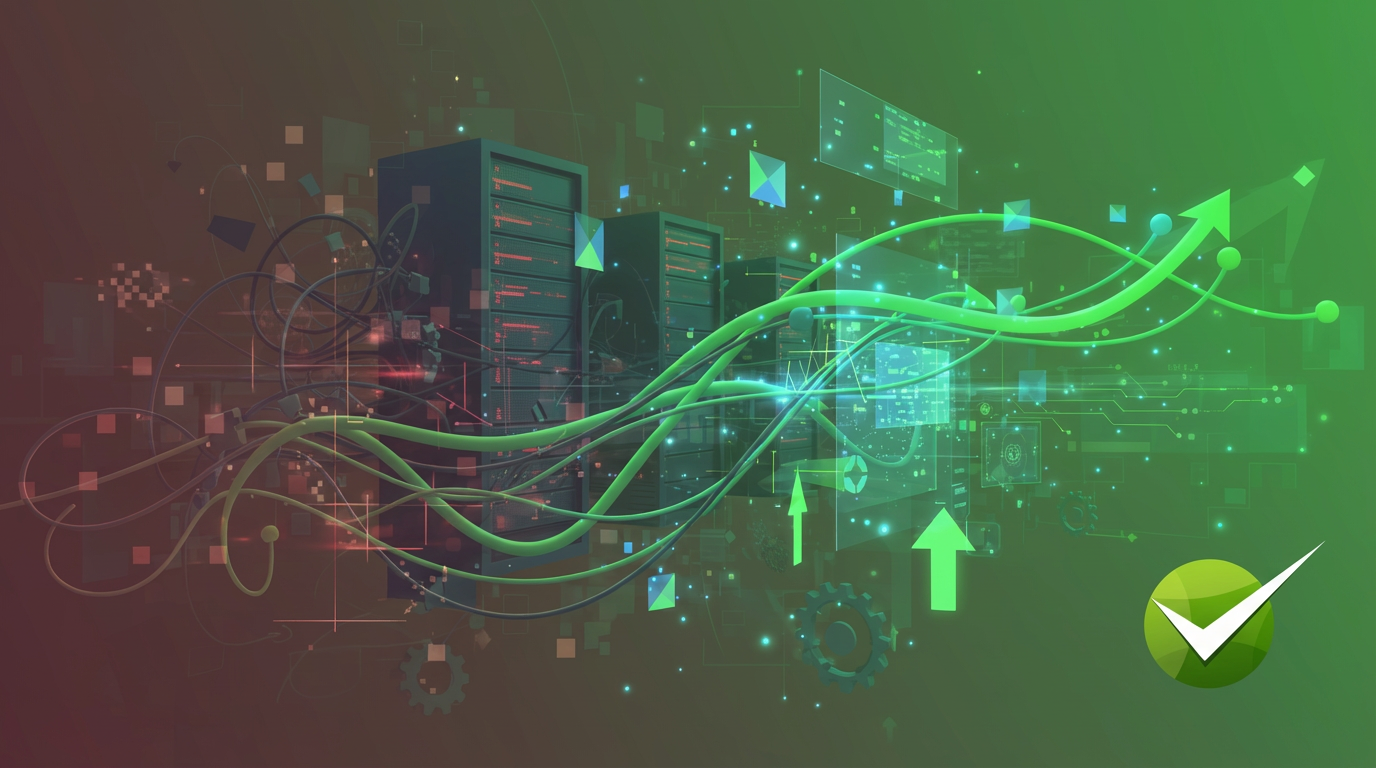
Legacy ITSM tools like SysAid were built for ticket tracking, not autonomous resolution. As IT complexity and user expectations grow, automation alone falls short. Agentic AI enables systems to understand intent, take action, and resolve issues end-to-end—exactly where Rezolve.ai bridges the gap.
This blog explains why traditional ITSM platforms struggle in an AI-first world, what agentic AI changes for IT support, and how Rezolve.ai modernizes legacy service desks with autonomous, Teams-native resolution.
Legacy vs Agentic ITSM Tools
Today’s organizations are cloud native, remote first, tool heavy, and always on. Employees expect the same immediacy from internal support that they experience in consumer technology. IT teams are leaner, budgets are scrutinized harder, and service expectations continue to rise. In this environment, the limitations of legacy ITSM tools are no longer subtle. They are structural.
The problem is not that platforms like SysAid failed. In fact, they succeeded in exactly what they were designed to do. The issue is that they were designed for a world where support was fundamentally reactive, ticket driven, and human executed. That world no longer exists.
This is where agentic AI enters the conversation, not as an enhancement, but as a necessary evolution. And this is precisely where Rezolve.ai bridges a gap that legacy ITSM tools simply cannot close on their own.
The World Legacy ITSM Was Built For
To understand why agentic AI matters, it helps to revisit the assumptions that shaped traditional ITSM platforms.
When tools like SysAid emerged, enterprise IT environments were relatively predictable. Applications lived on premise, user roles were stable, and the number of systems employees interacted with was limited. Support requests followed familiar patterns. Reset passwords. Provision laptops. Grant access. Troubleshoot network issues.
The role of ITSM was to manage volume and accountability. Tickets ensured nothing fell through the cracks. Queues ensured work was distributed. SLAs ensured responsiveness. Reporting ensured visibility.
In that context, the ticket was the perfect abstraction. It turned messy human problems into trackable units of work.
But over time, enterprises layered complexity on top of this model. SaaS sprawl exploded. Identity systems multiplied. Security controls tightened. Employees began working from anywhere, on any device, at any hour. At the same time, IT teams were expected to move faster with fewer resources.
The ticket never evolved to reflect this new reality. It remained a static container in a dynamic world.
Why Incremental Automation Is No Longer Enough
Most legacy ITSM vendors recognized these shifts and responded the only way they could: by adding automation on top of existing architectures.
Self-service portals were introduced to deflect tickets. Knowledge bases were added to reduce agent workload. Rule-based automation handled simple tasks, and chatbots offered basic conversational interfaces.
These additions helped, but only marginally.
The reason is simple. Rule-based automation assumes clarity. It assumes the user knows what they need. It assumes the problem fits neatly into a predefined category. It assumes that the path to resolution is linear.
Real employee issues rarely meet these assumptions.
An employee does not experience problems such as isolated tickets. They experience them as broken workflows. “I cannot join this meeting.” “My access suddenly stopped working.” “This tool was working yesterday, now it is not.” These are contextual, multi variable issues that span systems and time.
Legacy ITSM automation struggles here because it cannot reason. It can only execute instructions it has already been given. When reality deviates even slightly from those instructions, the system falls back to what it knows best: creating a ticket and waiting for a human.
At scale, this becomes a bottleneck that no amount of incremental automation can fix.
The Hidden Cost of Ticket Centric Support
The limitations of legacy ITSM are often discussed in technical terms, but the real impact is human.
From the employee’s perspective, support becomes a frustrating ritual. They explain their issue, get a generic response, try suggested steps that do not work, and then wait. Context is lost between interactions. Each follow up feels like starting over.
From the IT team’s perspective, work becomes repetitive and draining. Talented engineers spend large portions of their day resetting passwords, approving access requests, and handling routine issues that require little judgment but constant attention. Burnout rises. Attrition follows.
From a leadership standpoint, the math stops working. Support costs increase linearly with headcount. Employee satisfaction scores plateau. Digital transformation initiatives struggle because the support layer cannot keep up with the systems being deployed.
This is the ceiling of ticket driven ITSM. You can optimize it, but you cannot transcend it.
What Agentic AI Changes at a Fundamental Level
Agentic AI represents a shift from managing work to delivering outcomes.
Instead of asking, “Which queue should this ticket go to?”, an agentic system asks, “What is the user trying to achieve, and how do I make that happen?”
This difference may sound subtle, but it is profound.
An agentic AI system understands intent, not just keywords. It can ask clarifying questions when information is missing. It can plan a sequence of actions rather than executing a single step. It can interact with multiple systems, verify results, and adapt based on outcomes.
Most importantly, it can operate autonomously within defined boundaries.
In an ITSM context, this means that many issues never need to become tickets at all. They are resolved in the moment, conversationally, with accountability built into the system.
This is not about replacing IT professionals. It is about allowing them to focus on work that actually requires human judgment.
Why Legacy ITSM Platforms Struggle to Become Agentic
Given the promise of agentic AI, it is reasonable to ask why legacy platforms like SysAid cannot simply evolve into this model.
The answer lies in architecture.
Legacy ITSM systems are ticketing-first by design. Every process, report, and workflow revolves around the ticket as the primary object. Automation, analytics, and integrations all orbit around this core.
Agentic systems, on the other hand, are outcome first. They treat tickets as optional artifacts, not mandatory containers. They require persistent context, dynamic reasoning, and real time decision making.
Retrofitting this into a ticket centric system is not just difficult. It is fundamentally misaligned.
As a result, many legacy vendors end up bolting AI assistants onto existing workflows. These assistants can suggest responses, surface articles, or summarize tickets, but they do not change the underlying model. The human remains the executor. The ticket remains the bottleneck.
Rezolve.ai: Built for Autonomy, Not Assistance
Rezolve.ai approaches ITSM from a completely different starting point.
Rather than asking how to manage tickets more efficiently, it asks how to resolve employee issues autonomously while maintaining enterprise grade control.
This shift in perspective shapes every aspect of the platform.
When an employee reaches out for help, Rezolve.ai does not immediately think in terms of categories or queues. It listens. It interprets intent. It gathers context from identity systems, device data, application logs, and past interactions. It reasons about what is most likely wrong and what actions are required.
If the resolution is within its authority, it acts. If not, it escalates with rich context, not a blank ticket.
The result is a support experience that feels proactive, intelligent, and human, even though it is largely autonomous.
Eliminating L1 Work Without Compromising Control
One of the boldest claims around agentic AI is the elimination of L1 support. This claim is often met with skepticism, and rightly so.
Rezolve.ai achieves this not by ignoring governance, but by embedding it deeply.
Every autonomous action is governed by policies defined by IT leaders. Permissions are respected. Approvals are enforced where required. Every action is logged and auditable.
This allows Rezolve.ai to handle a wide range of common scenarios end to end, including access changes, password resets, software provisioning, and troubleshooting workflows, without human intervention.
At the same time, complex or sensitive issues are escalated intelligently, with full context and suggested next steps, dramatically reducing resolution time.
The human is no longer the default executor. They are the exception handler.
Context Is the Real Differentiator
One of the most overlooked limitations of legacy ITSM is its inability to maintain context across time and systems.
Tickets are snapshots. They capture a moment, not a story.
Rezolve.ai treats support as an ongoing conversation. It remembers previous interactions. It understands what has already been tried. It recognizes patterns across users, devices, and applications.
This contextual awareness allows the system to become better over time, not just faster.
For employees, this means fewer repetitive explanations and more meaningful support. For IT teams, it means insights that go beyond ticket metrics and into actual service health.
Meeting Employees Where They Work
Another critical difference lies in how support is delivered. Legacy ITSM tools rely heavily on portals. Employees are expected to leave their workflow, log into a separate system, and submit requests. Adoption suffers as a result.
Rezolve.ai brings support directly into the tools employees already use, through conversational and voice driven interfaces. Help becomes immediate and natural, not a chore.
This shift alone significantly increases engagement and satisfaction, while reducing the friction that drives shadow IT and workarounds.
Coexisting With Legacy ITSM, Not Replacing It Overnight
One of the most practical aspects of Rezolve.ai is its ability to coexist with existing ITSM platforms.
Organizations do not need to rip and replace SysAid or similar tools to benefit from agentic AI. Rezolve.ai can sit on top as an intelligent resolution layer, handling the majority of routine requests autonomously and escalating only what truly requires human attention.
Over time, this changes the role of the legacy ITSM system. It becomes a system of record rather than a system of execution.
This phased approach reduces risk while delivering immediate value.
The Future of ITSM Is Autonomous Service Delivery
The evolution from ticket management to autonomous service delivery is inevitable.
As enterprises continue to adopt AI across their operations, support cannot remain stuck in a model designed for a different era. The expectation will shift from responsiveness to resolution, from assistance to autonomy.
Legacy ITSM tools like SysAid were instrumental in professionalizing IT support. They laid the foundation. But foundations are not the same as frameworks for the future.
Agentic AI represents the next chapter in ITSM. It is not about doing the same things faster. It is about doing fundamentally different things better.
Rezolve.ai is built for this future, not as an add on, but as a new operating model for employee support.
Closing Thoughts
Every enterprise technology category eventually reaches a point where incremental improvements stop delivering meaningful returns. ITSM is at that point today.
Organizations that continue to rely solely on ticket driven, human centric support models will face rising costs, declining satisfaction, and increasing operational strain. Those that embrace agentic AI will unlock a new level of efficiency, resilience, and employee experience.
The question is no longer whether AI belongs to ITSM. It is whether your ITSM platform is capable of becoming autonomous.
Legacy tools like SysAid defined the past and Rezolve.ai is defining what comes next – with full L1 autonomy for employee support and shared services.
Book a Demo now


.webp)

.png)










.webp)