
Generation Z is entering the workforce in record numbers, bringing a new set of expectations for technology, communication, and workplace culture. This isn’t just a generational change; it’s a cultural and technological shift that challenges how organizations deliver support. They measure workplace satisfaction not only by salary or title but by how efficiently they can get their work done and whether their employer invests in modern, frictionless support systems.
For companies, adapting to these expectations is no longer optional; it’s a competitive necessity. Businesses that fail to meet Gen Z’s demands for speed, personalization, and integration risk losing top talent to more digitally progressive employers.
Gen Z in the workplace demands faster, more personalized, and more seamless support experiences than previous generations. To meet these expectations, support teams must integrate AI-driven tools, embed support into everyday workflows, and align service delivery with Gen Z’s digital-first, value-driven mindset.
Understanding Gen Z in the Workplace
Digital Natives with High Standards
Born between 1997 and 2012, Gen Z has grown up surrounded by instant communication, on-demand content, and personalized digital services. They are the first generation to have no memory of a world without smartphones, app stores, and high-speed internet. This has shaped not only how they interact with technology but also their patience levels and expectations for efficiency.
Core Characteristics of GenZ for technological preferences:
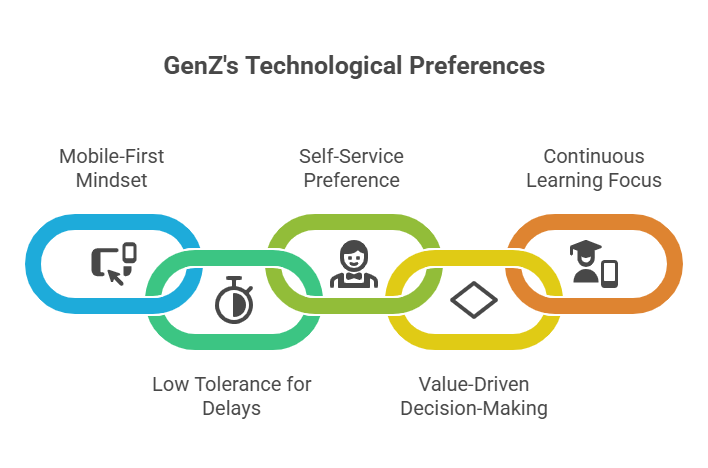
- Mobile-first mindset with seamless multi-device usage
- Low tolerance for delays and inefficiency
- Preference for self-service backed by expert help when needed
- Value-driven decision-making that considers ethics, diversity, and sustainability
- Focus on continuous learning and career growth opportunities
According to Deloitte’s 2024 Gen Z and Millennial Survey, over 70% of Gen Z employees say they would consider leaving a company if the technology and tools provided are outdated or inefficient (Deloitte, 2024).
Why Gen Z’s Expectations Challenge Traditional Support Models
1. Instant Gratification
Gen Z is accustomed to immediate results, waiting days for a ticket resolution isn’t acceptable. They expect real-time responses and automated fixes that keep work moving without bottlenecks.
2. Unified Digital Experience
Fragmentation frustrates them. Siloed IT and HR support means multiple logins, slow response times, and conflicting answers. Gen Z wants integrated, mobile-friendly, and easily accessible help in one place.
3. Personalized Interactions
Generic, one-size-fits-all answers don’t work for Gen Z. They want support that understands their role, past issues, and preferred solutions, and delivers context-aware responses.
How Gen Z Is Reshaping IT & HR Support?
- Conversational AI Frontlines: AI that doesn’t just answer questions but executes actions, resetting passwords, provisioning accounts, or ordering equipment instantly.
- Omni-Channel Consistency: Support that works seamlessly across desktop, mobile, email, and chat platforms, without losing context.
- Effective Self-Service: Search and service catalogs that produce relevant, accurate results, powered by AI and continuously updated to reflect policy changes.
Strategies to Support Gen Z in the Workplace
1. Embed Support in Daily Tools
Integrate IT and HR help directly into Slack, Teams, or other collaboration platforms. This eliminates the need for employees to leave their workflow and increases adoption rates.
2. Use AI for Contextual Speed
Leverage AI with memory and contextual awareness to deliver personalized, instant answers that adapt to each employee’s needs.
3. Ensure Explainability
Automated decisions should be transparent and auditable, ensuring trust and compliance.
4. Build Feedback Loops
Encourage real-time ratings and comments on support interactions to continuously improve service quality.
5. Train for Empathy
Support teams should be equipped with soft skills to communicate authentically in digital channels, blending efficiency with a human touch.
The Role of AI in Meeting Gen Z Expectations
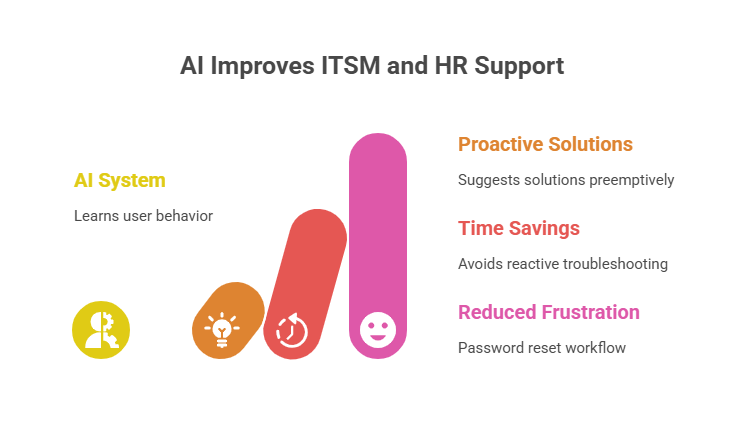
AI for ITSM and HR support is no longer a “future concept”; it’s a present-day necessity. AI can remember past interactions, learn from user behavior, and proactively suggest solutions before issues become problems. This predictive capability aligns perfectly with Gen Z’s preference for preventative action over reactive troubleshooting.
For example, an AI system might detect recurring login failures for a user and preemptively suggest a password reset workflow or security setting update, saving time and avoiding frustration.
Aligning Support with Gen Z’s Values
Gen Z places significant emphasis on company culture, ethics, and transparency. Support systems that reinforce these values, such as providing accessibility features, using inclusive language in documentation, and ensuring data privacy, are more likely to win their trust.
Organizations can also use AI to monitor sentiment in support interactions, identifying moments where an employee might be feeling undervalued or ignored, and intervening before dissatisfaction grows.
Why Your Support Team Is Central to Gen Z Workplace Success?
Your support team is more than just a problem-solving department; it’s a cultural touchpoint that directly influences how Gen Z perceives your organization. Every interaction is an opportunity to demonstrate your company’s commitment to efficiency, empathy, and innovation. For Gen Z, a fast and helpful support experience signals that they are valued contributors, not just employees navigating bureaucracy. Conversely, slow or outdated support processes can erode trust and engagement quickly.
Empowering your support team with AI tools, real-time collaboration capabilities, and clear escalation paths ensures they can deliver the kind of service Gen Z expects. In many cases, the quality of support determines whether Gen Z employees feel encouraged to grow within the company or start looking elsewhere for more modern, responsive workplaces.
The Role of Leadership in Shaping Gen Z’s Expectations
Leadership plays a critical role in shaping how effectively an organization can meet Gen Z’s expectations in the workplace. Executives and managers must not only approve budgets for modern support solutions but also actively model their use. When leaders demonstrate commitment to adopting AI-powered tools and integrated support channels, it signals to employees that innovation is valued.
Additionally, leadership should foster a culture of inclusivity and continuous improvement, encouraging cross-departmental collaboration to ensure both IT and HR support systems evolve with user needs. This visibility and active involvement from leadership helps build trust and accelerates adoption of new support initiatives.
Measuring Success
Measuring the impact of modernized support for Gen Z in the workplace goes beyond tracking ticket volume. Companies should look at metrics like First Contact Resolution (FCR), Employee Satisfaction (ESAT) scores, and Self-Service Success Rates. However, the numbers tell only part of the story; qualitative feedback from Gen Z employees can uncover friction points that data alone may miss.
Sentiment analysis tools can help track overall employee mood during support interactions, providing insights into whether systems feel efficient or frustrating. By blending hard metrics with employee feedback, organizations can make targeted improvements that both optimize operations and enhance user experience. Over time, this data-driven, human-centered approach becomes a competitive advantage in retaining talent.
Pitfalls to Avoid While Adapting Support Systems for Gen Z in the Workplace
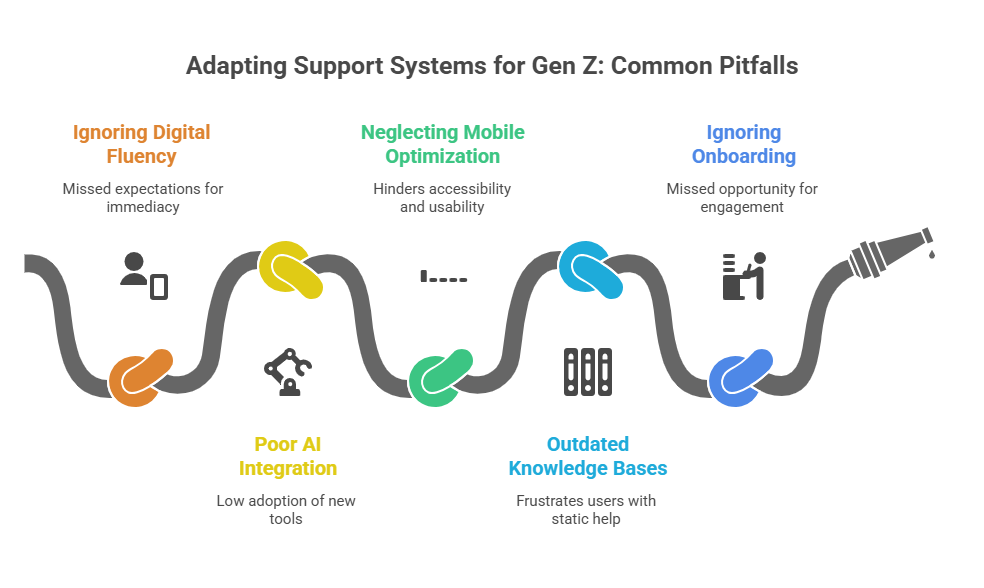
When adapting support systems for Gen Z in the workplace, several common mistakes can derail progress.
- Treating Gen Z exactly like older generations ignores their unique digital fluency and expectations for immediacy
- Investing in AI tools but failing to integrate them into daily workflows leads to poor adoption rates
- Neglecting mobile optimization
- Implementing self-service portals without investing in AI-powered search and contextual help will quickly frustrate users, as outdated, static knowledge bases are ineffective
- Ignoring onboarding experiences is a missed opportunity; first impressions set the tone for how engaged Gen Z employees will be with support tools long term
The Future of Support for Gen Z in the Workplace
Predictive, proactive, and personalized experiences will define the future of workplace support. For Gen Z employees, this means having issues resolved before they even report them, thanks to predictive analytics that detect patterns and flag problems early. Support will also move toward cross-domain collaboration, where IT, HR, and facilities management work from a unified interface, eliminating silos and delivering faster outcomes.
Voice and multimodal capabilities will become standard, allowing employees to interact with support through chat, voice, and even visual cues like screenshots. As AI continues to evolve, support systems will become more human-like in understanding context and emotion, helping Gen Z feel understood and valued.
Organizations that embrace this future will find themselves attracting and retaining the most tech-savvy talent in the market.
Closing Note
Meeting these expectations isn’t simply about keeping up with trends; it’s about building a workplace where the next generation can thrive, innovate, and feel valued from day one. Those who adapt will not only retain top talent but also future-proof their operations in an increasingly digital and competitive market.

Key Takeaways
- Gen Z in the workplace values speed, personalization, and accessibility.
- Support should be embedded in the tools they already use.
- AI with memory and context is essential to meet expectations.
- Self-service must be intuitive and effective.
- Leadership must view modern support as a retention and engagement strategy.
FAQs
Q1: How does Gen Z differ from Millennials in support needs?
Gen Z expects faster, more personalized, and mobile-friendly experiences, with a greater emphasis on real-time resolution.
Q2: Can existing support teams adapt without full system overhauls?
By integrating AI assistants into existing collaboration tools and improving self-service search capabilities.
Q3: How important is mobile access for Gen Z support?
Gen Z often uses multiple devices daily and expects consistent access across all of them.
Q4: What’s the first step to meeting Gen Z expectations?
Embed support into the tools they already use (e.g., Slack, Teams) and ensure AI-driven personalization.


.webp)

.png)









.webp)